


Some sci-fi movies announce their greatness immediately. Within the first ten minutes, they demonstrate confidence, clarity of vision, and control of tone that separates a future classic from a forgettable genre entry. These openings introduced worlds, themes, and emotional stakes with astonishing efficiency.
Whether through distinctive visual language, perfectly paced exposition, or a single unforgettable set piece, these films signal that they know exactly what they are. In each case, the opening moments are effective, but also foundational, shaping everything that follows. The movies listed below made promises in their opening scenes and then spent the rest of their runtime fulfilling them.
The Fifth Element (1997)
The opening of The Fifth Element is a masterclass in world-building. Beginning in 1914 Egypt, the film immediately blends sci-fi mythology with pulp adventure, ancient mysticism, and playful humor. Without overwhelming exposition, Luc Besson establishes cosmic stakes, clear iconography, and a sense of grand absurdity that feels completely assured.
The design work alone is impressive, with alien hieroglyphs, floating stones, and elaborate costumes. It immediately signals a filmmaker operating at full creative throttle and that confidence never wavers. The rest of The Fifth Element expands this into a wildly imaginative, visually explosive space opera that still feels singular decades later.
The Fifth Element’s commitment to style and character makes it endlessly rewatchable. Importantly though, its sincerity prevents it from collapsing into parody. From its opening mystery to its operatic finale, The Fifth Element delivers on every promise its first ten minutes boldly make.
Children Of Men (2006)
Children of Men announces its brilliance with devastating restraint. The opening scene drops the audience into a world where humanity’s youngest person has just died, communicated through hushed reactions rather than exposition. Alfonso Cuarón immediately establishes a bleak, lived-in future where despair is normalized and hope feels extinct.
The infamous long takes begin early, signaling a commitment to realism and immersion that defines Children of Men. The opening coffee shop explosion is certainly very shocking, but it’s also thematic. It reinforces how casually violence has become embedded in daily life.
From that moment on, Children of Men never lets the audience feel safe or detached. It offers breathtaking emotional weight, blending sci-fi concepts with urgent political commentary. It’s a deeply human masterpiece that feels more relevant with every passing year.
Back To The Future (1985)
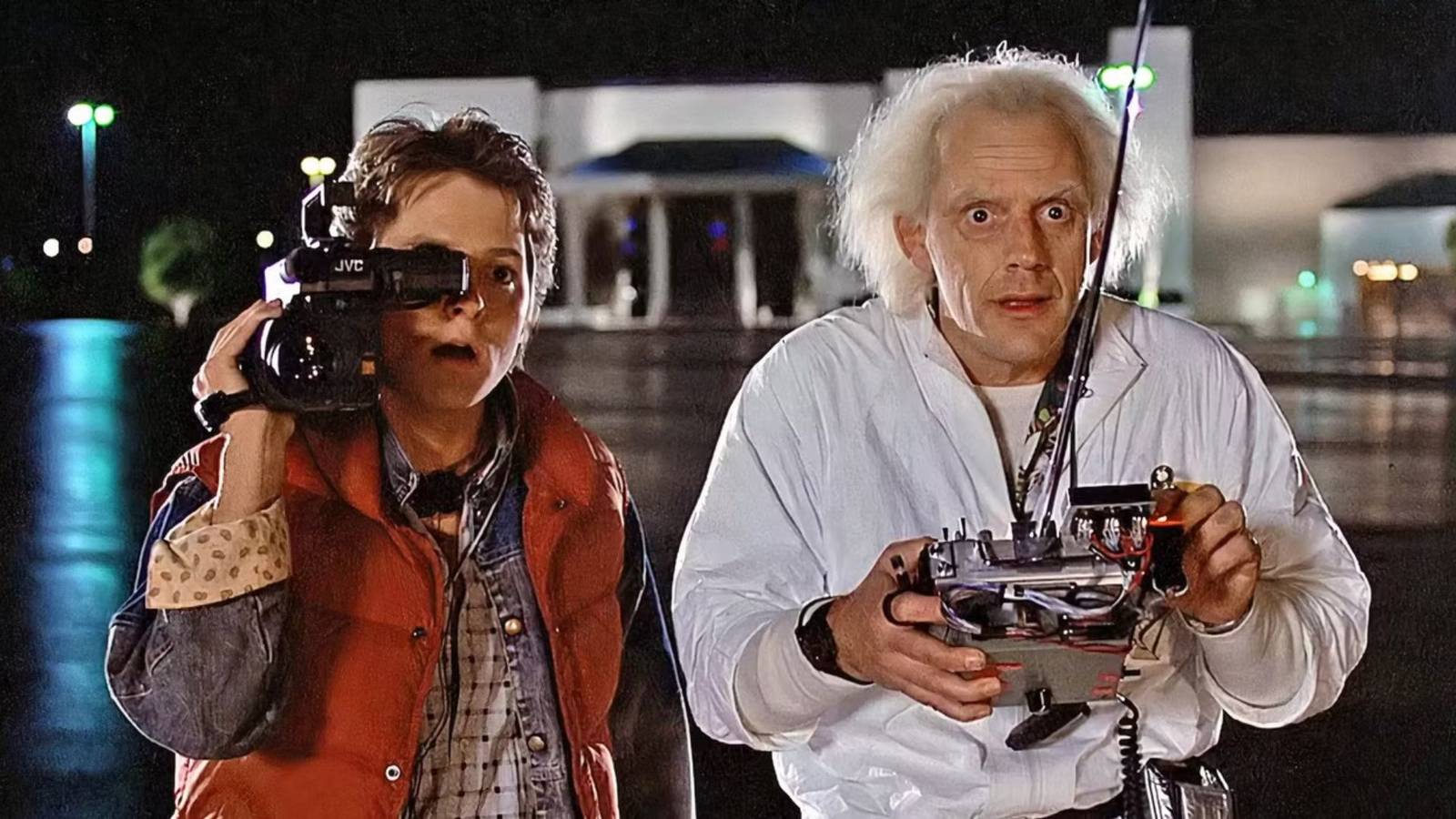
Back to the Future instantly marks itself as a 1980s masterpiece with its iconic opening scene. Its opening montage glides through Doc Brown’s cluttered lab filled with ticking clocks, wordlessly establishing character, tone, and the central obsession with time. By the time Marty McFly plugs in his guitar, the movie already feels perfectly calibrated.
Everything is playful but purposeful, energetic without being chaotic. Marty’s skateboard ride to Huey Lewis and the News’s “The Power of Love” is particularly iconic. This quickly conveyed Marty’s character and laid the perfect foundation for the romantic time-travel plot that followed.
That confidence carries through the entire Back to the Future, resulting in one of the most structurally perfect screenplays ever written. Every setup pays off, every rule is followed, and every emotional beat lands. Back to the Future is a paradigm in storytelling and delivers an appropriately thrilling opening scene.
Blade Runner (1982)
The opening moments of Blade Runner are absolutely hypnotic. Ridley Scott’s slow reveal of Los Angeles in 2019 is built upon an endless sprawl of fire, smoke, and neon. It instantly communicates scale, decay, and existential dread.
Combined with Vangelis’ haunting score, Blade Runner establishes mood before plot, trusting atmosphere to do the heavy lifting. The opening Voight-Kampff test further reinforces the movie’s philosophical core, introducing questions of humanity, empathy, and identity with chilling subtlety. From the start, Blade Runner feels deliberate and unhurried.
Blade Runner is daring enough to let silence and imagery speak. That approach defines the rest of the film, which unfolds as a meditative noir rather than a conventional sci-fi thriller. Its influence on science fiction, visual design, and thematic ambition is immeasurable.
The Terminator (1984)
The Terminator wastes no time declaring its intent. The opening future-war sequence immediately establishes stakes and inevitability, presenting a nightmarish vision of humanity’s extinction. The transition to the Terminator’s arrival is appropriately cold, silent, and methodical. It introduces one of cinema’s most iconic villains with terrifying efficiency.
There’s no humor, no relief, just relentless purpose. That clarity defines the entire Terminator film. James Cameron’s direction ensures every scene builds tension, driven by momentum rather than exposition. Importantly, the movie never loses sight of its central idea: survival against an unstoppable force.
What begins as a stripped-down sci-fi slasher evolves into a perfectly constructed thriller with real depth and mythic weight. The opening ten minutes declare intensity, urgency, and precision. The Terminator delivers on all of it.
Jurassic Park (1993)
Jurassic Park signals its mastery before the dinosaurs even properly appear. The opening sequence depicts an unseen creature thrashing inside a containment cage. It uses suggestion, sound, and panic to establish awe and danger simultaneously.
Steven Spielberg makes a bold choice to delay spectacle, grounding the film in procedural tension and human error. That restraint immediately builds trust. When the dinosaurs finally do appear, the payoff feels monumental rather than indulgent. The rest of Jurassic Park continunes this by perfectly balancing wonder and terror.
Jurassic Park isn’t about resurrecting dinosaurs, it’s about humanity’s arrogance in believing it can control nature. From its ominous opening to its unforgettable set pieces, the film delivers a sci-fi adventure that feels timeless. It’s precise and endlessly rewatchable.
Star Wars: The Empire Strikes Back (1980)
The Empire Strikes Back immediately expands the scale of Star Wars. The opening Battle of Hoth is colder, darker, and more desperate than anything in the original film. It signals a tonal shift toward complexity and loss.
Within minutes, it’s clear this isn’t a victory lap, it’s a challenge to both characters and audience expectations. Empire’s confidence lies in its patience, taking time to deepen relationships, explore failure, and complicate heroism. That early sense of uncertainty pays off as the story unfolds into one of the most thematically rich sci-fi blockbusters ever made.
Within minutes, Empire masterfully conveyed Luke’s burgeoning relationship with the force, his newfound ingenuity, and set up his hunt for Yoda. It perfectly established the new status quo with one of its most thrilling battle scenes. This opening promise of danger and consequence is fulfilled all the way to its devastating finale, cementing it as a sci-fi masterpiece.
The Thing (1982)
John Carpenter’s The Thing announces its brilliance and secretly its whole plot in the paranoid opening. The opening chase depicts Norwegians desperately pursuing a dog across the Antarctic ice. This raises immediate questions without offering answers.
There’s confusion, dread, and a creeping sense that something is deeply wrong. Carpenter establishes isolation as the film’s true antagonist, making the setting as threatening as the creature itself. That uncertainty defines the entire movie. As the story unfolds, The Thing becomes a masterclass in tension, using practical effects, silence, and distrust to sustain unbearable suspense.
Every character interaction feels loaded with danger, because anyone could be the monster. The opening suggests ambiguity and unease, and the film never betrays that tone. Instead, The Thing doubles down, delivering one of the most nihilistic and psychologically brutal sci-fi horror masterpieces ever made.
Aliens (1986)
Aliens took the bold move of reframing its universe before firing a single bullet. The opening quietly reintroduces Ripley in a world that has moved on without her, establishing trauma, disbelief, and institutional arrogance. That restraint signals James Cameron’s intent to escalate carefully rather than rush spectacle.
When action does arrive, it feels earned. Aliens transforms sci-fi horror into full-scale action perfection without sacrificing tension, using military bravado as a setup for inevitable collapse. From the first briefing scenes, the audience can sense that confidence will be punished.
Aliens fulfills its opening by blending character, scale, and relentless momentum. Ripley’s evolution into a hardened survivor anchors the chaos emotionally, while the action remains clear and purposeful. The film effectively expands Alien while becoming a different genre entirely.
The Matrix (1999)
The Matrix jumped straight into the action with one of its most thrilling scenes, all while flaunting its groundbreaking technology. Trinity’s escape scene is one of the movie’s most exhilarating sequences, with perhaps the most iconic example of “bullet time.” It features fast-paced, stylized martial arts and established the movie’s impossible physiques.
The Matrix quickly sets up the distinctive cyberpunk tone and the enormous stakes with the seemingly unstoppable Agents. Importantly, it doesn’t ease its viewers into its complex world. It’s daring and dynamic from the start, with no exposition or context.
That confidence is maintained throughout the rest of the movie. The Matrix completely delivers on this opening promise by reinventing blockbuster language while remaining remarkably emotionally grounded. It’s rare for a movie to feel so fully formed from its first moments, but The Matrix knows exactly what it is – and changed cinema in the process.