


I’m raising a college-age daughter, so I’m fully accustomed to complaints about the maturity of boys from her and her friends. One friend joked, “I only wish boys’ problems were too much time playing video games.” Nor are their chief concerns limited to coarse behavior, alcohol consumption or inappropriate internet viewing. What are these young women so worried about? Gambling.
“Almost every guy I know is gambling,” my sophomore daughter said. Her friends agree. They are not happy about it, and they sure are worried. During the discussion, my son jumped in, saying, “Gambling is running deep for high schoolers.”
A fellow classmate of his shocked me by saying, “I know some kids who saved their summer work money to use for gambling.” He went on to say kids are most certainly gambling by using their parent’s identities — in some cases with parental knowledge. Thankfully, he recognizes, “I’ll lose more than I can win, but I still see my friends sitting on their couch with their phone picking unders and overs.”
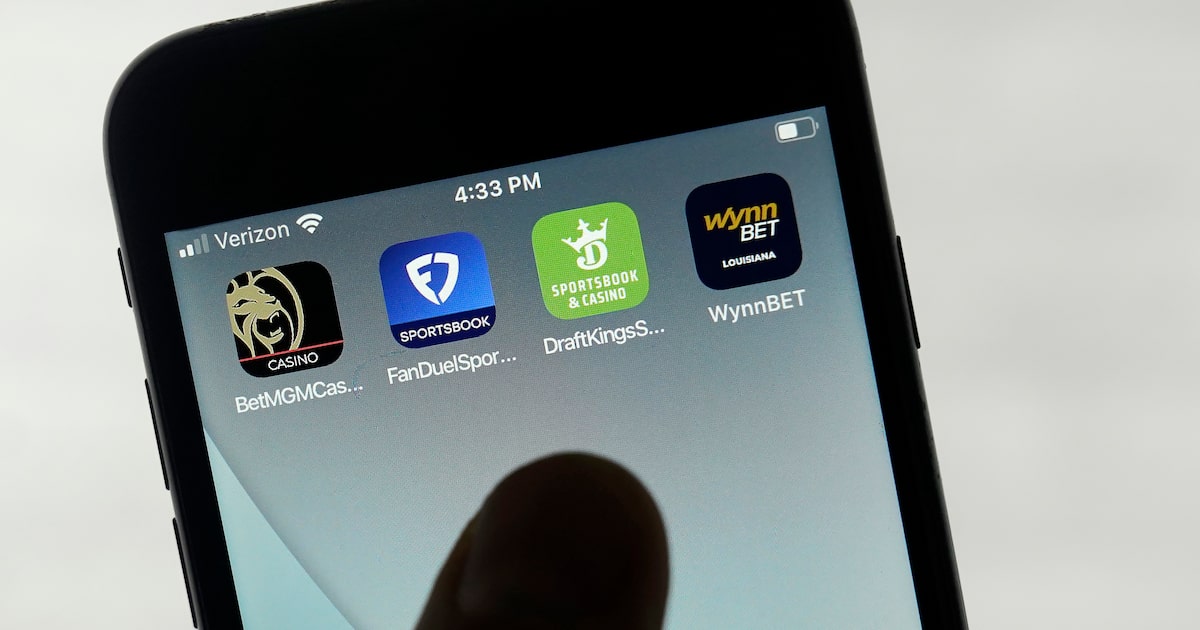
Online sports gambling spiked after a 2018 Supreme Court ruling. Now, 38 states allow sports gambling, and one study says 27% of men have online sportsbook accounts.
If you can’t tell already, I’m not much of a gambler. I get my fill of danger running a small business.
I’ve been worried about online gambling since I noticed the industry’s advertisements during televised games seemed to outnumber those for medications, cars and insurance — the typical stuff aimed at middle-aged men who like to watch sports. The networks took cigarette advertisements off the air because they allowed people to engage with a proven, addictive product. I guess gambling is different?
Make no mistake, advertisers are targeting young people to woo a new generation of victims. It does not stop with television advertisements. Ads on stadiums, websites and apps abound. Now they’re even on uniforms.
I don’t even like names on the back of uniforms, so I immediately noticed the clutter. The Washington Capitals were the first with a Caesars Sportsbook patch. They play their games in the Capital One Arena where there is a sportsbook (more than 10 other professional venues have similar facilities). Hockey, it seems, is the most gratuitous in supporting gambling.
Researchers studied this summer’s Stanley Cup finals and determined viewers were exposed to more than three gambling messages per broadcast minute. NBA games had fewer gaming messages, but still had up to 0.26 gambling messages per game. It’s pervasive because it’s a huge and growing business.
A study conducted in 2024 by Siena College and St. Bonaventure University determined 19% of Americans use gambling apps. The largest group of users, not surprisingly, are men between 18 and 49. Fifty-nine percent of those account holders make wagers at least once a week. That seems habitual, and potentially unhealthy.
Thankfully, I’m not the only one who is nervous. Academics are now studying the impact of the $100 billion annual industry. What they are finding is alarming.
A survey by the Pew Research Center of almost 10,000 adults across the country determined that 43% of respondents believed sports betting is bad for society. In 2022, only 34% of adults surveyed had negative perceptions. Maybe the billions of dollars being spent on gambling advertising during sports contests are creating a bi-modal outcome. More people are gambling, and more people are realizing its dangers. Some might fit both categories.
Last year, a scholarly paper, “The Financial Consequences of Legalized Sports Gambling,” by professors at the University of Southern California and UCLA determined that “access to sports gambling is harming consumer financial health by increasing [gamblers’] level of debt.”
The professors maintain that credit scores are declining and there are indicators of excessive debt. The scholars maintain, “We find a substantial increase in average bankruptcy rates, debt sent to collections, use of debt consolidation loans, and auto loan delinquencies.” That’s a lot to unpack, but it sounds serious. The scholars warn that access to sports gambling is so pervasive that consumer health is endangered, evidenced by an increasing level of debt and a greater likelihood of bankruptcy. In fact, young men in low-income environments have twice the average probability of bankruptcy.
I worry that fantasy football leagues and NCAA brackets have served as a gateway activity for children. Fantasy players miss out on why team sports matter. There are no lessons about leadership, discipline, teamwork and cooperation to benefit from. There are no points for sportsmanship, pride or loyalty. There’s surely no team, only “I,” in the fantasy and gambling world. It’s a lonely place, I suspect.
My son’s friend said, “It’s getting out of hand, especially during college football season, and it worries me.” I’ll remain worried for sports and for our children: I care deeply about both. Both of my children and their friends are concerned. Perhaps there’s hope in that.