


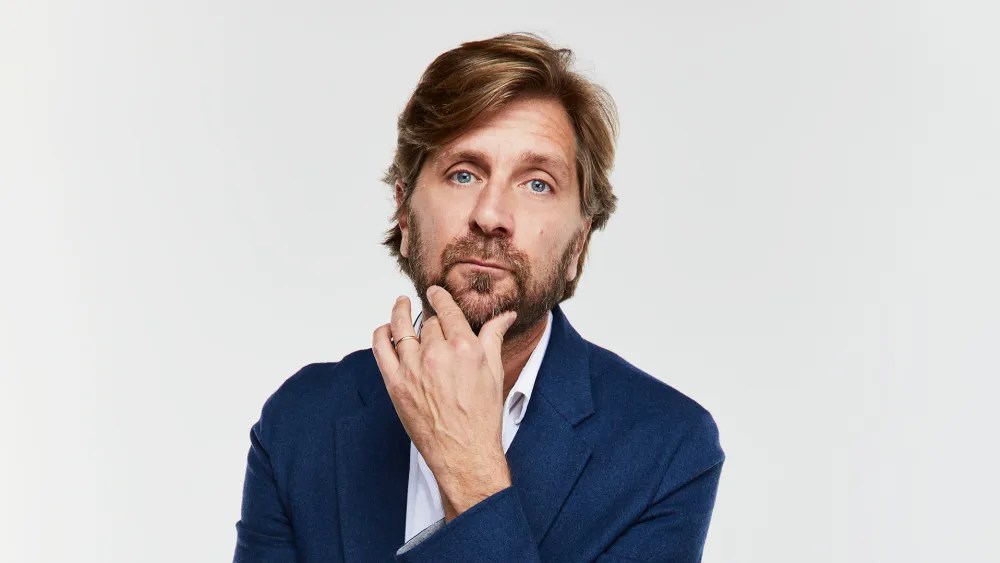
“Triangle of Sadness” director met with Variety following his explosive presentation of much-anticipated “The Entertainment System Is Down,” which might be heading to Cannes in 2026. Or in 2027.
You don’t care about spoilers, but why did you reveal such crucial plot points at Göteborg Film Festival? Including the ending?
When I think about some of the directors I really admire, I like it when they make me curious about how they’re going to visualize things. When I watch a movie or hear about a great idea, I don’t care how it ends. All I want to know is: How will it be made? That’s what creates my curiosity.
Around 2005, YouTube changed the way we look at moving images because these videos always give away the ending in the title. Yet, you still click on them. You go to the theater knowing how “Hamlet” will end. When we hear about a film, we’re curious to see how the director and his team will approach it. Cinema must establish a relationship with the audience much more quickly nowadays. Anything that piques their curiosity is something you can use.
One way to quickly establish a relationship with your viewers is to shock them. Or, at the very least, make them uncomfortable.
The goal is to make them think. Shocking them just for the sake of it is not interesting. It’s easy. Making them think is the hard part. They should think about themselves and the themes you want to discuss. I always have to use my own experiences, even if I haven’t lived them myself. Maybe I’ve just heard about them? I think the core of being a director is that you have to look inside yourself and deal with your own experiences and pain.
You showed some behind-the-scene material, too. Why did you want to build this airplane, basically from scratch?
Shooting a film on an airplane is extremely difficult. If you’re not careful, you won’t end up with a good movie. For my previous film, I drew the storyboard images myself. But this time, imagine drawing the same storyboard image on an airplane, over and over again. It would be incredibly boring! When our DoP, Fredrik Wenzel, was introduced to VR, he suggested we try it. I was in Mallorca, Fredrik was in Stockholm, and the set designer was here in Gothenburg. We could go into this VR world as avatars, walk around, and talk to each other.
You talked about the dilemmas some of your characters will face. One couple will discover infidelity. Going through something like that somewhere you can’t hide or escape from would be my biggest nightmare.
Mine too. At the same time, which is something I haven’t mentioned yet, I also shot images outside the airplane. You can see the airplane flying 1,000 kilometers per hour, 10,000 meters above the clouds. Meanwhile, inside, people are fighting about trivial things. It’s absurd.
Keanu Reeves is cast as an electrician here. He has appeared in the “Bill & Ted” films [as well as “Good Fortune” in 2025]. However, comedy is not the genre with which he is most associated, would you agree?
Yes, exactly. He has a very deadpan comedic quality to his acting, and it worked out really well. I’m looking forward to seeing how the audience reacts to his performance. He’s introduced in the film beautifully. When it comes to the lady whose husband dies of heart attack, they are asking him: ‘Excuse me, could you change seats with the widow? She’s in shock. And we have no place to store the body, so you’ll have to sit next to the corpse, you know.’ Playing with the public’s perception of Keanu Reeves in relation to his character in this film was so much fun.
In your work, you often talk about terrible, unpleasant things. And then you make it funny.
I’m happy it turns out that way. It’s absurd to make dramas about human beings. Come on, we are quite privileged, right? When I look at my own life and the conflicts I’ve been dealing with, they seem quite trivial. Especially considering we’re all going to die.
I did a retrospective in the U.S. called “In Case of No Emergency” and that title says something about my films. There’s basically never any physical danger. There will be physical danger in this film, but the characters won’t realize it until the last 15 minutes of their lives. We feel that being human is so painful. It’s interesting to examine our herd mentality and how sensitive we are to socializing. I’ve been interested in that for a long time. From the day we’re born, we start training in socialization. Later, it’s possible to just pull the strings and quickly make things quite painful. Out of all feelings, shame is the one that takes over most brain processes. We can almost feel it physically.
Don’t you think that feeling shame can be healthy?
Trump would probably appear more sympathetic if we could see that he was ever ashamed.
Everyone is expecting to see this film at Cannes. Why wait until 2027 which, as you said, might be the case?
In February, we’ll see how much longer we need. As a director, what would be even more important to me is seeing the dynamics in the cinema when people are watching it. I need to be able to conduct test screenings because there are many sensitive elements here, including a 15-minute sequence. I had a painful experience with “Play” because I didn’t have time for test screenings beforehand. I’m not going to put myself in that situation again. Also, I want to maximize my films’ potential.
Many European directors, upon hearing “test screenings,” would just run for the hills.
They’re completely wrong because the collective experience of being in a cinema changes the pacing of the film. It’s not about asking the audience: “Did you like this, or did you like that?” It’s about sitting with them as a director and feeling the energy in the room.
I started doing this with “Force Majeure,” “The Square” and “Triangle of Sadness” because I felt that European cinema had lost its connection with audiences. It was imitating and copying a certain arthouse tradition. But if you look back at the 1960s, ’70s, or ’80s, the connection with the audience was much better back then. John Cleese fine-tuned the humor in “A Fish Called Wanda” after 12 different screenings. It’s not just about making things comfortable for them. But it’s very ignorant to think that you don’t have to carefully consider how the audience will react.
(The interview has been edited for clarity and concision.)