


Spy movies have existed almost as long as cinema itself, evolving alongside real-world espionage, political anxiety, and filmmaking technology. From silent-era thrillers to modern prestige dramas, the genre has proven remarkably flexible. Indeed, the greatest spy films deliver more than twists and gadgets; they capture the mood of their era while redefining what espionage storytelling can be.
Some spy movies emphasize realism and moral ambiguity, others embrace escapism and iconic style. Regardless, they have all left an enduring mark on popular culture. These films achieved more than succeed on release; they shaped how future spy stories were written, shot, and performed. Spanning 100 years of cinema history, these masterpieces represent the genre at its smartest and tensest.
Spione (1928)
Fritz Lang’s Spione (Spies) is one of cinema’s earliest and most influential spy thrillers, laying the groundwork that the genre still follows today. Released during Germany’s Weimar era, the film blends criminal intrigue, international surveillance, and romantic tension into a surprisingly modern narrative. Lang’s villain, Haghi, operates through hidden networks, coded messages, and financial manipulation, concepts that feel strikingly contemporary.
Spione’s scale is ambitious. It boasts elaborate sets, rapid pacing, and cross-border stakes that predate James Bond by decades. More importantly, Spione understands espionage as an invisible war of information rather than brute force.
Its visual language, full of shadowy rooms and secret compartments, helped define how spies would look on screen. Nearly a century later, Spione remains gripping, historically vital, and foundational. Spione proves that sophisticated spy storytelling began long before the sound era and continues to influence filmmakers across genres worldwide.
Tinker, Tailor, Soldier, Spy (2011)
Thomas Alfredson’s adaptation of John le Carré’s Tinker, Tailor, Soldier, Spy is a masterclass in restrained, adult espionage cinema. Rather than action set pieces, the film thrives on silences, glances, and bureaucratic dread. It fully immerses viewers in Cold War paranoia.
Gary Oldman’s George Smiley is deliberately opaque. He’s a spy who wins through patience and emotional suppression rather than bravado. Furthermore, Tinker, Tailor, Soldier, Spy demands attention, trusting the audience to follow fragmented timelines and dense dialogue without simplification. Its muted color palette and meticulous production design reinforce a world drained of idealism and certainty.
Every conversation feels like a chess move, every relationship compromised by suspicion. Tinker, Tailor, Soldier, Spy shows that spy movies can be intellectually demanding and deeply suspenseful without ever raising their voice. It offers a haunting portrait of loyalty eroded by secrecy within institutions built on lies and fear.
Goldfinger (1964)
Goldfinger perfected the James Bond formula and permanently defined cinematic spy escapism. Sean Connery’s Bond is confident, dangerous, and effortlessly charismatic, while the film balances humor with genuine menace. Auric Goldfinger remains one of the genre’s great villains, memorable not only for his scheme but for his chilling composure.
Goldfinger’s set pieces, from the laser table to Fort Knox, established the spectacle audiences still expect from spy blockbusters. John Barry’s iconic score and Shirley Bassey’s title song elevate the film’s larger-than-life tone. Yet Goldfinger also understands pacing and clarity, making its plot accessible without sacrificing tension.
Goldfinger’s influence is impossible to overstate. Countless spy films either imitate or react against it. More than entertainment, Goldfinger is a blueprint that reshaped the genre forever and set expectations audiences still carry into modern blockbusters today.
The 39 Steps (1935)
Alfred Hitchcock’s The 39 Steps is an essential bridge between early thrillers and modern spy cinema. The film introduced the innocent-man-on-the-run template that countless espionage stories would later adopt. Robert Donat’s reluctant hero is thrust into a web of foreign agents, secret organizations, and national paranoia, all conveyed with remarkable economy.
Hitchcock’s direction prioritizes momentum, using wit and suspense in equal measure. The film’s famous set pieces, including the handcuffed escape and cross-country chase, feel timeless in their construction. Yet beneath its light tone lies a sharp understanding of fear, misinformation, and state secrecy.
The 39 Steps helped codify narrative rhythms that the spy genre still relies on. It demonstrates how tension, clarity, and character can coexist beautifully in mainstream entertainment. Its influence echoes through decades of thrillers and international espionage storytelling across cinema history worldwide.
Three Days Of The Condor (1975)
Three Days Of The Condor represents 1970s spy cinema at its most paranoid and politically charged. Set against the backdrop of post-Watergate distrust, the film strips espionage of glamour and replaces it with anxiety and moral unease. Robert Redford’s analyst is an everyman caught between institutions that casually erase lives to protect power.
Sydney Pollack’s direction emphasizes realism, using urban locations and quiet confrontations instead of spectacle. Consequently, Three Days Of The Condor’s tension comes from uncertainty, as allies become threats and information proves unreliable. Its romance subplot underscores the cost of surveillance culture on personal freedom.
Three Days Of The Condor remains disturbingly relevant, capturing how intelligence agencies can drift from defense into self-preservation. Few spy films so effectively translate national paranoia into intimate, relentless suspense with performances and themes that resonate long after the credits roll, even for modern audiences.
John Frankenheimer’s The Manchurian Candidate is one of the most unsettling spy thrillers ever made. It weaponizes Cold War fears of brainwashing, political manipulation, and hidden power. Rather than focusing on international missions, the film turns inward, suggesting the greatest threats come from within trusted institutions.
Frank Sinatra delivers one of his strongest dramatic performances as a soldier unraveling a conspiracy that feels both surreal and terrifyingly plausible. Angela Lansbury’s chilling turn as a controlling political operator redefined what a spy movie villain could look like. Meanwhile, the film’s bold narrative structure and nightmarish imagery push espionage into psychological horror territory.
Decades later, The Manchurian Candidate still feels provocative. Its themes of misinformation and ideological control continue to resonate powerfully. It’s a spy movie that doesn’t just thrill – it deeply disturbs, proving the genre’s capacity for political and emotional depth rarely matched since.
From Russia With Love (1964)
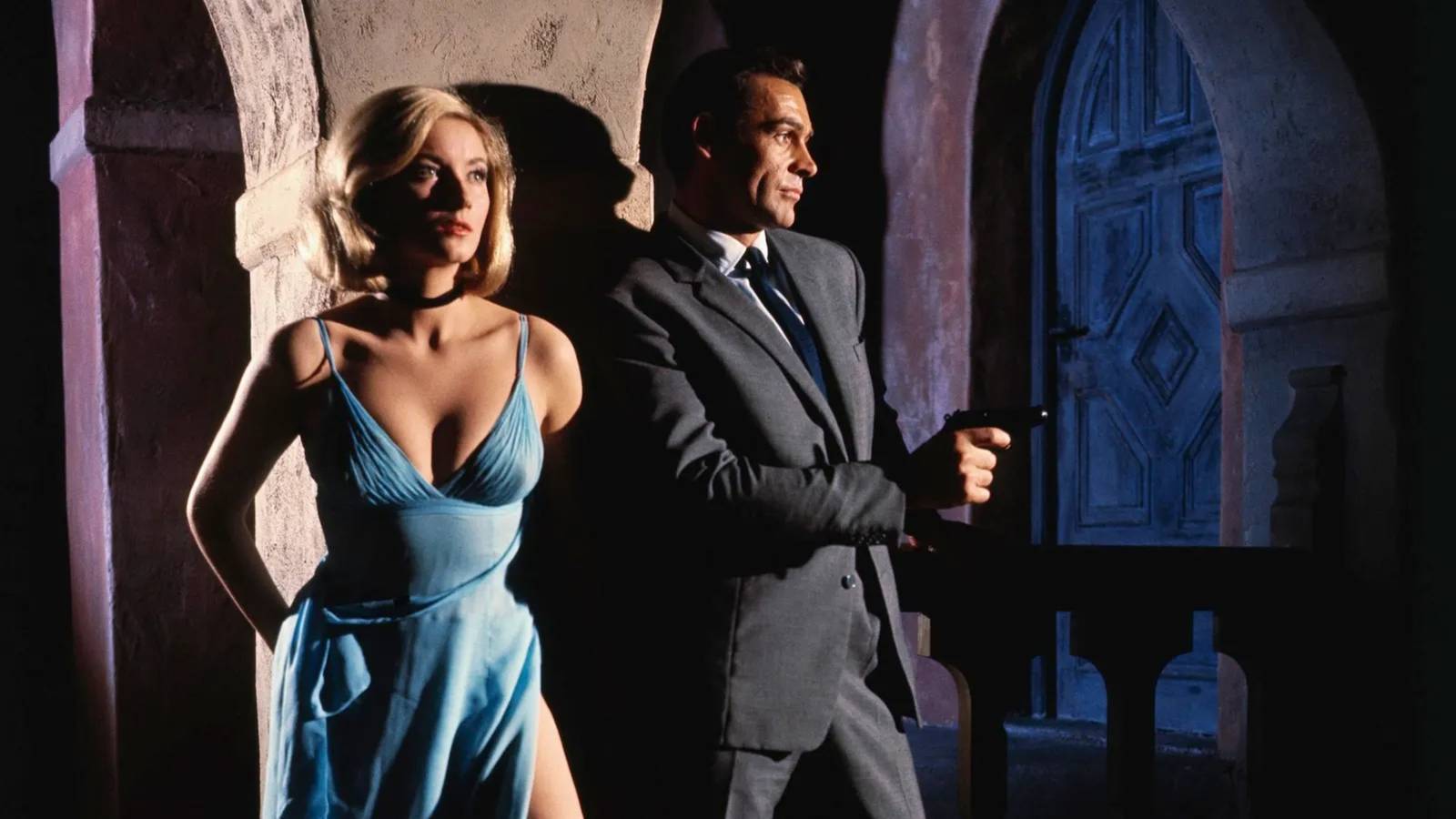
While Goldfinger made James Bond iconic, From Russia With Love perfected the franchise’s tension-driven storytelling. The film leans closer to espionage realism than spectacle. It grounds Bond in a world of shadows, betrayal, and calculated violence.
Sean Connery’s performance is sharper and more vulnerable, portraying a spy who survives through instinct rather than invincibility. The Cold War backdrop is used intelligently, with SPECTRE manipulating global powers from the margins. Robert Shaw’s Red Grant stands as one of the series’ most intimidating adversaries, a mirror image of Bond stripped of charm.
The Orient Express sequence remains a masterclass in suspense. From Russia With Love demonstrates how spy films can balance action with intrigue. It influenced not just Bond’s future but the wider genre’s pursuit of credibility and danger over excess.
North By Northwest (1959)
Alfred Hitchcock’s North by Northwest is a dazzling blend of espionage, romance, and mistaken identity. The result redefined how stylish a spy thriller could be. Cary Grant’s advertising executive is thrust into an international conspiracy, embodying Hitchcock’s fascination with ordinary men caught in extraordinary circumstances.
The film’s most iconic scenes, from the crop duster attack to the Mount Rushmore climax, remain some of cinema’s most inventive suspense sequences. Yet beneath the spectacle lies a precise understanding of pacing and character. Eva Marie Saint’s femme fatale provides the movie’s emotional complexity, blurring lines between ally and threat.
North by Northwest doesn’t dwell on realism, but its confidence and craftsmanship influenced everything from Bond to modern action thrillers. It’s espionage as pure cinematic pleasure. It shows how intelligence, humor, and scale can coexist seamlessly in a genre often defined by seriousness alone.
The Lives Of Others (2006)
The Lives of Others reframes the spy genre through the lens of surveillance and conscience. This fosters a deeply human perspective on intelligence work. Set in East Germany before the fall of the Berlin Wall, the film focuses on a Stasi officer tasked with monitoring artists deemed politically suspicious.
Rather than high-stakes missions, tension arises from listening, watching, and slowly questioning authority. Ulrich Mühe’s restrained performance anchors the film, charting a quiet moral awakening that feels both intimate and devastating. It explores how constant observation corrodes both the watched and the watcher, turning espionage into an act of emotional violence.
The Lives of Others’ meticulous realism and ethical complexity elevate it beyond genre conventions. It proves spy cinema can be profoundly moving, using intelligence work to explore empathy, guilt, and resistance within oppressive systems. It leaves a lasting emotional impact rarely achieved in thrillers.
The Third Man (1949)
Carol Reed’s The Third Man is a haunting postwar spy thriller that merges noir aesthetics with espionage intrigue. Set in a divided Vienna still scarred by World War II, the film uses its location as a character, reflecting moral decay and political fragmentation. It depicts Joseph Cotton as a naive protagonist who uncovers layers of deception surrounding an old friend.
This leads to one of cinema’s most famous reveals. Meanwhile, Orson Welles’ Harry Lime is charismatic, terrifying, and unforgettable. He embodies the seductive amorality of black-market espionage with chilling ease.
The Third Man’s tilted camera angles, shadow-heavy cinematography, and zither score create an atmosphere of constant unease. More than a mystery, The Third Man is a meditation on loyalty and survival in a morally compromised world. Its influence spans genres, proving spy films can be stylish, philosophical, and emotionally resonant all at once.