


I have a confession to make: my favorite Studio Ghibli movie is almost certainly not your favorite Studio Ghibli movie.
The house that Hayao Miyazaki and Isao Takahata helped build may have launched itself into anime superstardom with sprawling fantasy epics Spirited Away and Princess Mononoke but, after rewatching the entirety of Studio Ghibli’s oeuvre not long after turning 30, it’s the restrained slice of life dramas that resonate me with most today.
As much as I adore the pitch-perfect whimsy of My Neighbor Totoro or the overflowing imagination found in Howl’s Moving Castle, From Up on Poppy Hill – 15 years after release – is one that is almost certainly going to stick with me for far longer.
A Hill to die on
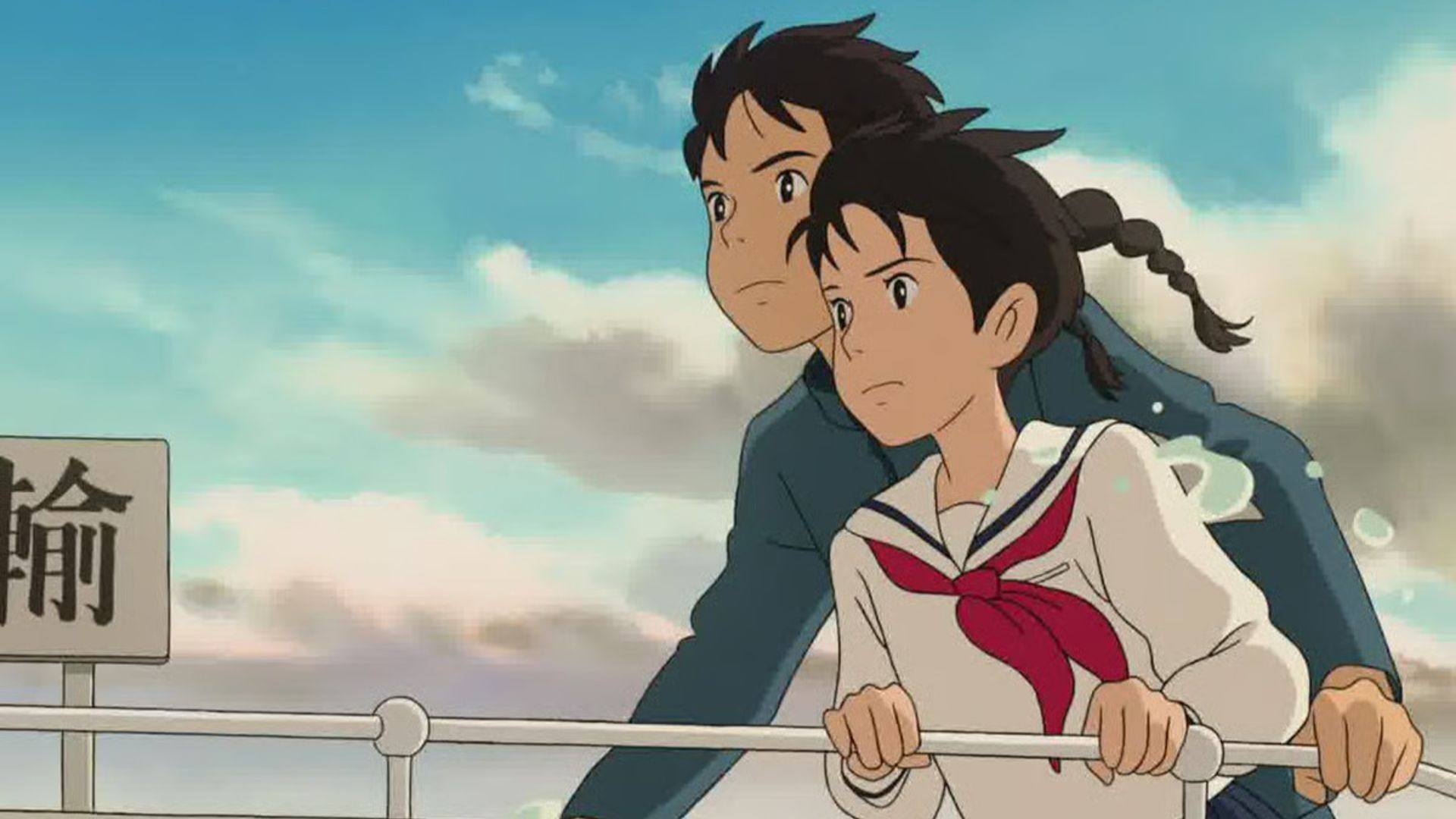
Set in the quaint surroundings of 1960s Japan, a country just starting to learn how to feel and love again after years of war-torn turmoil and American occupation, From Up on Poppy Hill revolves around Umi, a headstrong girl who falls into league with fellow student Shun as they fight to save their school’s Latin Quarter.
Far from simply housing its many eclectic clubs and societies, the Latin Quarter is Ghibli through and through, a hustling, bustling character in its own right: a backdrop for its many colorful characters to congregate as the anti-authority fight rages on, flanked by Satoshi Takebe’s bouncy, always-hummable soundtrack.
From there, From Up on Poppy Hill coalesces into what I feel is a Ghibli gold standard: a rebellious, funny, and frequently poignant exploration of what it means to be a child – and how that experience shapes who you can become as an adult.
It’s deeply affecting, too, with its key iconography – the signal flags with ties to her father – providing fertile narrative soil that sideswipes the viewer when they least expect it. Crying at a Ghibli movie is commonplace; bursting into tears out of nowhere feels like a magic trick orchestrated by the less-heralded Miyazaki director, Hayao’s son, Goro.
Yet, it’s the romance between Umi and Shun that gets the blood pumping in ways that Howl’s Moving Casting and Nausicaa simply don’t as much for me anymore (although, admittedly, the played-for-laughs ‘incest’ angle reaches dicey territory until a merciful third-act reveal). As they grow closer through a last-minute trip to Tokyo to stop the Latin Quarter from being demolished, it’s a potent reminder of where the studio’s quality always lies: it’s the heart, not the hearty helpings of creativity, that combine best with Ghibli’s inimitable sense of style and animation.
My Ghibli hot take
It’s something present in other Ghibli works, too, if you know where to look. Whether it’s the snatches of hazy, half-forgotten memories from the older protagonist in Only Yesterday, the magical realism and heart-wrenching loss in When Marnie Was There, or the wistful sense of trying to capture what almost was and never can be again in the criminally underseen Ocean Waves, Ghibli’s catalog is filled with gems just waiting to be mined. That counts doubly so for those who are lapsed Ghibli fans or – like me – resisted the curiosity to go digging for deep cuts in past decades.
Like many, I came to From Up on Poppy Hill late. In many ways, I wish I hadn’t waited for so long; in other ways, it arrived at just the right time. It’s a truly underappreciated classic that requires the audience to come to it with both a little more emotional growth, plus the knowledge and experience of Ghibli’s more treasured works under their belt. It’s a film that has the capacity to entertain, sure, but its sharpest tool is its capacity to surprise and elicit a more intimate sense of wonder than impish cat buses and talking, flickering embers.
Coming back to Ghibli in my 30s is an exercise in admitting I have grown. From Up on Poppy Hill standing above bonafide classics isn’t a contrarian opinion, it’s simply an admission of a secret I hadn’t dared say until now: I want my Ghibli to be less Totoro and more Grave of the Fireflies. As Miyazaki likely approaches his final work, I would be more than happy to return to a more reserved register for the legendary Japanese animation studio’s next masterpiece.