


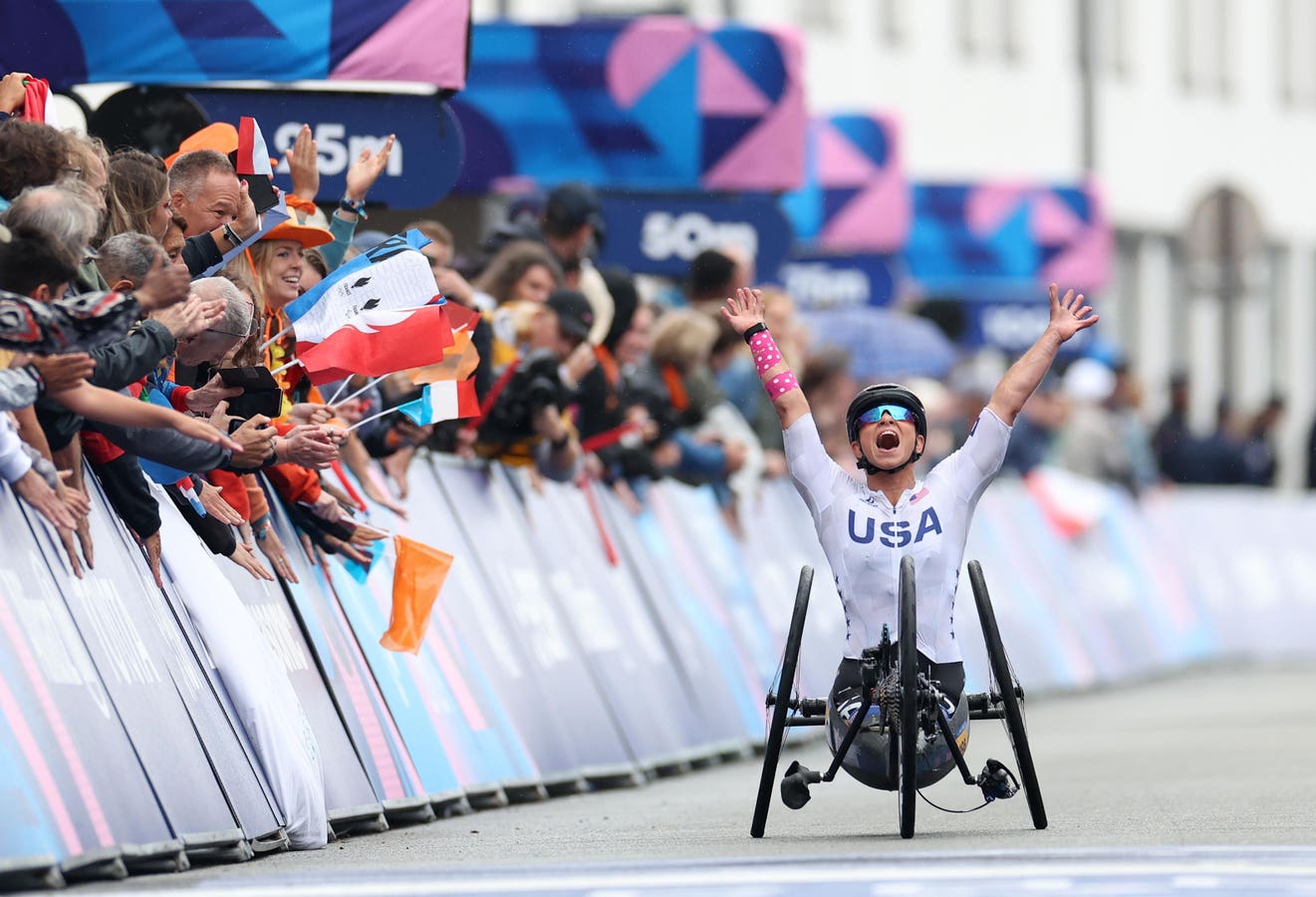
The first Paralympic Games recognized by the International Olympic Committee (IOC) occurred in 1960 in Rome, Italy, however accessible global sporting events have a history that spans over a century including the Deaflympics started in 1924, the Stoke Mandeville Games started by Ludwig Guttmann in 1948, and the Special Olympics in 1968. The Stoke Mandeville Games, which began in England at the hospital of the same name, were founded by Guttman as he worked with patients with spinal cord injuries incurred during World War II. The Stoke Mandeville Games went international in 1952 and continued to expand, becoming the foundation for the current Paralympic Games.
Although the term Paralympics was not approved by the IOC until 1984, all events from the 1960 games, which were still known as the International Stoke Mandeville Games, are now known as the Paralympics, originally due to the connection with paraplegics, but as the games have expanded to include a greater variety of accessible sports, the fact that it runs parallel to the Olympic Games is also said to be a motivation for the official adoption of the name. The incredible growth of the Games and the accomplishments of its athletes, coaches, and supporters can serve as an example for leaders across a number of industries.
Accommodate Employees and Offer Different Paths to Success
The growth of the Paralympics has shown that with some accommodation, whether it is adaptive equipment, a shift in rules, or other support, it will increase the amount of elite athletes that can compete at the highest level in various sports. The first Stoke Mandeville Games featured 16 competitors and the Paralympic Olympic movement has grown exponentially with 665 athletes expected in Italy for the 2026 edition.
Leaders can take a lesson from the evolution of the Paralympics on accommodating different approaches to completing tasks and ultimately be successful in their organization or industry. This can be as simple as being more flexible when employees work to accommodate employees who have to navigate different responsibilities or time commitments. This includes those who take care of others, including parents or those responsible for other family members, employees in school, or those who work more efficiently outside of the standard nine to five work block. This not only helps them feel less stressed to meet certain, sometimes arbitrary, time expectations, but also help retain employees who have skillsets often developed from these other responsibilities
Many accommodations typically viewed as beneficial for those with different physical or sensory abilities can be helpful for many including meeting recording, captioning and transcription and communicating to employees in multiple ways including email, face-to-face, or audio. Also ensuring the environment is comfortable for all by evaluating lighting, office design, noise, and overall accessibility can help all employees feel more welcome and work more efficiently.
MORE FOR YOU
Make Sure Your Employees Feel Seen
One of the biggest obstacles in the growth of adaptive sports has been visibility and access to the necessary equipment. Schools and youth sports organizations have only recently offered opportunities in these sports, including a select few high schools and colleges offering adaptive equipment to participate in various sports and events, including the six sports and 79 events at the 2026 Games. Also, the exclusive United States rights holder, NBC, has faced criticism over not broadcasting the full Paralympic Games, not promoting the Games, and a lack of comprehensive and primetime coverage similar to its Olympic counterpart. Adding to this problem is the fact that top adaptive sporting events including Paralympic qualifying events, world and national championships do not receive much coverage, if at all.
The lack of visibility for adaptive athletes has always been an issue, even in the digital age. In an organization, this can lead employees to feel forgotten and overlooked while possibly leading to a reduction in the efficiency and quality of their work. Helping employees feel seen and appreciated not only helps improve the individual’s morale, but can serve as an example for others in an organization, much like seeing adaptive athletes achieve success at the highest level. An organization’s success depends on its staff, so managers must make sure they recognize good work and successful performance, which establishes a more positive environment for all employees.
Cultivate a Community of Support
Like any elite athlete, Paralympians rely on support of their coaches, trainers, and loved ones. This support helps the athletes navigate both obstacles that all athletes face and those unique to top adaptive athletes. Even with the growth in opportunities in adaptive sports, those who participate or have access to adaptive sports are small, but their unique experiences are shared by the support within the community of adaptive athletes. This helps the athletes stay involved in their sport while building relationships with others to help navigate the ups and downs of their athletic careers.