


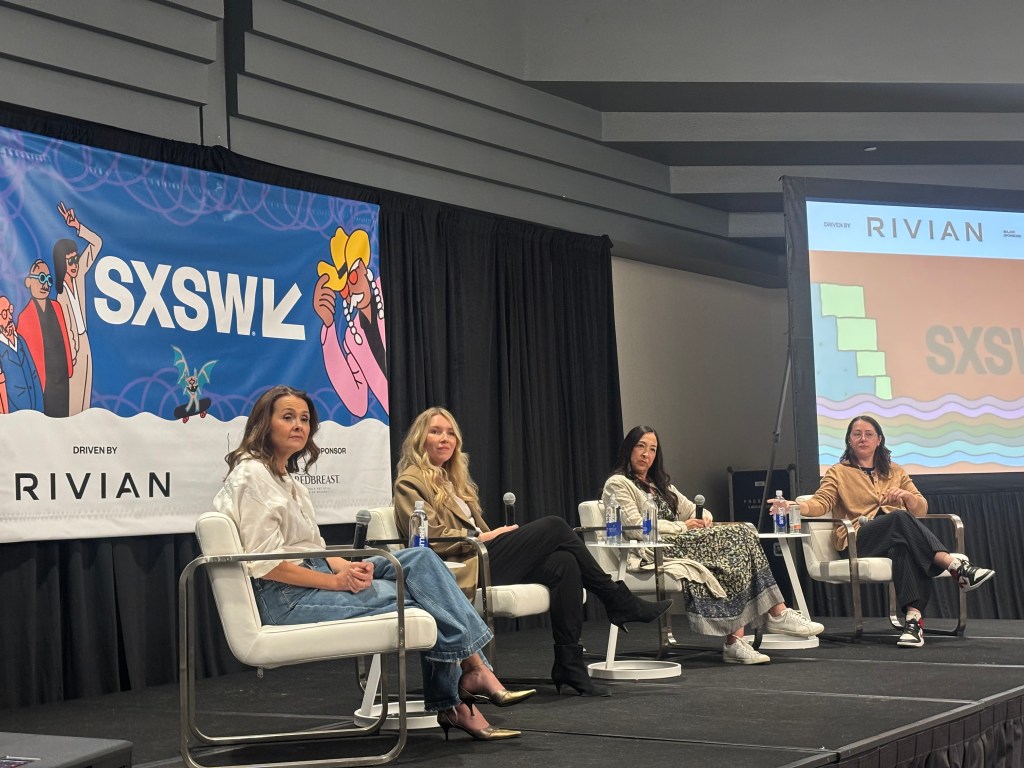
Shorter seasons have reshaped the television landscape, controversially so. A trio of NBCUniversal development executives has mixed opinions.
Financially, a longer season is a better model, said Vivian Cannon, EVP, Drama Development, Universal Television. “If you’re doing eight episodes, that means that everything you’re putting into your budget per episode is divided by eight, like the big set you’re going to build. If you’re doing 22, you get to split up the cost of that set over 22 episodes. Financially, it just is a better model to do longer orders,” she said at SXSW.
“So, I’m kind of hoping that where we’re headed is fewer television shows … but hopefully longer orders. And hopefully those longer orders will require more writers in the writer’s room,” she added at the panel It’s In Development: Creating Great TV For Global Platforms alongside colleagues Margaret Schatzel, SVP, Global Scripted Series, Universal International Studios, and Jennifer Gwartz EVP of UCP.
“One thing I will say is a benefit to the shorter orders, when we’re looking at casting and packaging, is the opportunity to get some A-list talent,” said Gwartz. “If you were committed to longer orders, if they’re doing a film, you’re not going to get the access or the opportunity.”
Another plus can e location, she said. Upcoming Peacock series The Five-Star Weekend starring Jennifer Garner,shot on Nantucket. “It was really special and really unusual. It’s a very difficult island to shoot on,” she said. If we were shooting 22 episodes, it would mostly be on a sound stage,” she said during the convo moderated by Katie Campione of Deadline.
Schatzel noted, “We will always be guided by the story that we’re trying to tell and advocate for how many episodes that should be.” However, “shorter orders can allow networks to take bigger risks, especially on younger, up-and-coming writers, up and coming writers that maybe don’t have the experience and a 22 episode order would look like a lot for them to take on.
“If it’s more concise, we know how to put the infrastructure around them.”
On pilot season, it’s shrinking, “but it is real, because I’m moving through it right now,” said Cannon, who is working on five – which she says is unique to NBC this season vs rolling pilots or none at all. She calls the process immensely valuable.
“Straight to series is great. You know you’re going to get on the air. But the pilot is a chance to really test your concept, check the chemistry with your cast.
“Trying to do something straight to series is kind of like building an airplane while you’re flying it, because you don’t really get to see your first episode until you’re shooting episode four or five, and then, by that point. some things are already baked in.”
They talked about evolving formats with short form, user generated content, YouTube verticals capturing audience time and attention, calling the trend totally intriguing and very complicated.
“There are plenty of stories that fit best as a film, as a one-hour TV show, a 30-minute, and now there are vertical options as well. And I think the hope is a high tide raises all boats. Scripted content is scripted content. And having those fans, that awareness, I think, is a blueprint for everyone, and how we can hopefully all work together … It really just comes down to storytelling, and what is the right format for a story,” said Gwartz.
The quick hits can impact the approach to development, be it a limited series or an ongoing show. “We have to be evaluating we’re competing for so many eyeballs and audiences. So how are you grabbing those audiences — by the end of the pilot, or in the first three minutes of the show? And those are often the questions and the dialog that we will have.”