


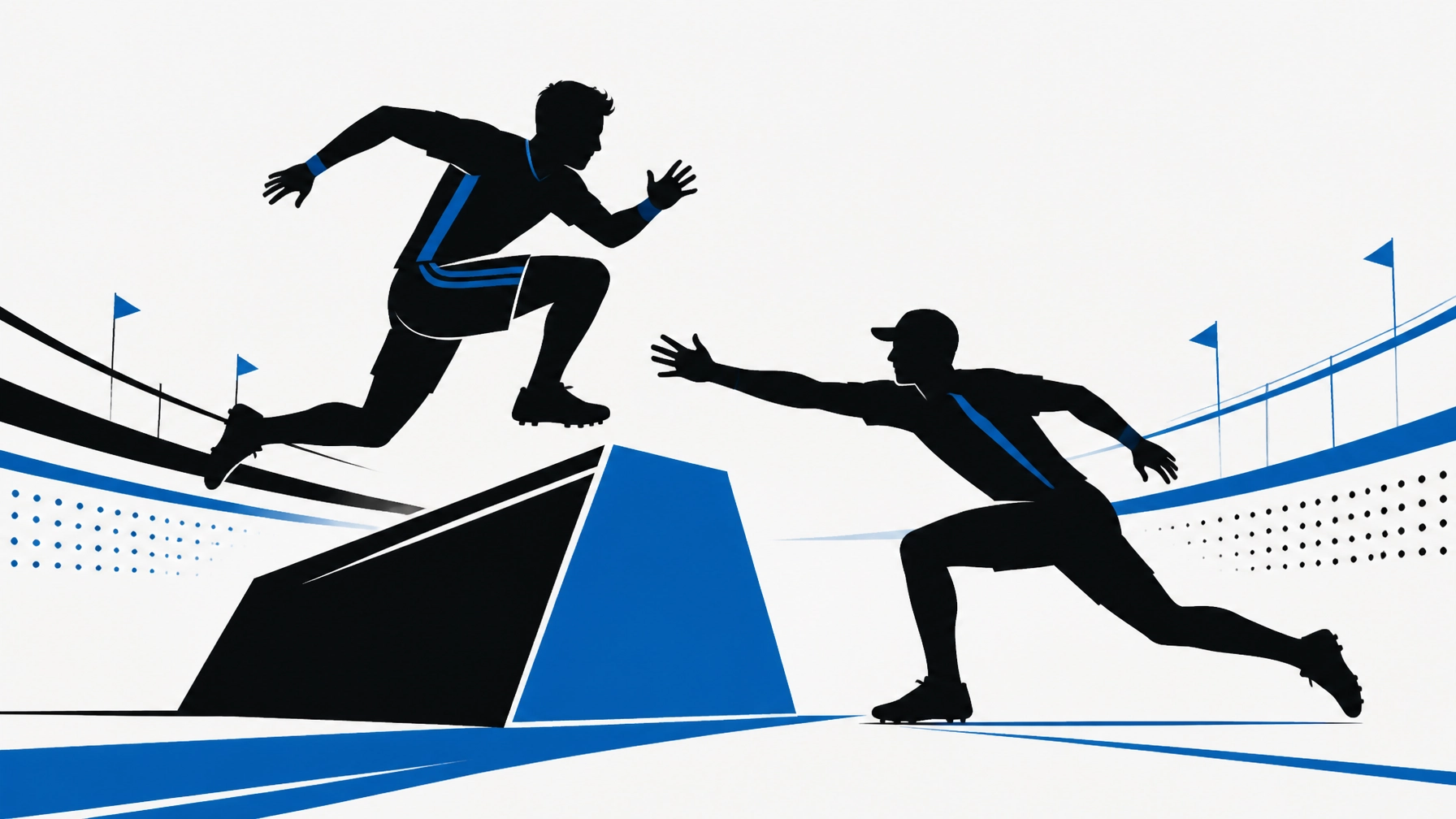
One of the most distinctive features of Ultimate Tag (Fox, 2020) was its roster of professional taggers, each presented not just as athletes but as larger-than-life characters with superhero-style codenames. Below is a breakdown of the main tagger titles, who was associated with each, and why those names fit their personas and styles.
One of the most distinctive features of Ultimate Tag (Fox, 2020) was its roster of professional taggers, each presented not just as athletes but as larger-than-life characters with superhero-style codenames. These titles and nicknames were central to the show's branding: they turned a simple game of chase into a spectacle of "heroes" and "monsters" pursuing everyday contenders through elaborate obstacle courses.
In today’s entertainment industry news, we see a resurgence of this character-driven sports model, but Ultimate Tag remains a masterclass in thematic athlete branding. Below is a breakdown of the main tagger titles, who was associated with each, and why those names fit their personas and styles, along with some of the best and most popular moments tied to each tagger and key contenders.
The Core Tagger Roster and Their Codenames
The show featured 18 professional taggers, each with a distinct codename and visual identity. The names were chosen to evoke specific traits : speed, size, aggression, intelligence, or unpredictability : and were reinforced through entrances, promos, and on-course behavior. This strategy turned the arena into a living comic book, a move often discussed in sportsmedia.news circles when analyzing the intersection of competition and narrative.
Speed and Agility-Focused Taggers

The Flow – Tavon McVey
- Why the name: “The Flow” suggests smooth, effortless movement and perfect rhythm.
- In-show identity: Portrayed as one of the most technically proficient chasers, known for clean lines, efficient footwork, and a signature diving “Superman” tag.
- Best/popular moments: Juvie’s chase (Episode 1) : The Flow’s Superman dive to tag contender Juvie became one of the show’s earliest viral highlights, instantly establishing The Flow as an elite, almost unstoppable hunter. Multiple recaps cited The Flow as the “tagger MVP” of the premiere.
Rocket – Julian Daigre
- Why the name: “Rocket” implies explosive acceleration and straight-line speed.
- In-show identity: Marketed as a pure speedster, used where raw pursuit mattered most.
- Best/popular moments: Several early chases showcased Rocket exploding off the start line to cut down contenders before they could hit top speed, reinforcing his “human missile” image.
Spitfire – Sydney Olson
- Why the name: “Spitfire” connotes quickness, sharpness, and a fiery temperament.
- In-show identity: A fast, aggressive female tagger deployed in tighter, more technical sections.
- Best/popular moments: Highlight reels often featured Spitfire darting through narrow corridors and catching contenders mid-transition.
The Kid – Corbin Reinhardt
- Why the name: “The Kid” plays on youthful energy and the idea of the best kid at recess who always tags you.
- In-show identity: Nimble, agile, with a playful, cocky vibe.
- Best/popular moments: The Kid was frequently shown toying with contenders : letting them think they’d created space before snapping back with a quick tag.
Power and Intimidation Taggers

Iron Giantess – Laura Micetich
- Why the name: “Iron Giantess” signals overwhelming size and strength in a female competitor.
- In-show identity: At 6-foot-1, framed as the most physically imposing female tagger.
- Best/popular moments: Jessica vs. Iron Giantess in Dodge Tag became a signature early moment, with Jessica’s desperate sprint framed as a classic speed-vs-power battle.
Caveman – Josh Yadon
- Why the name: “Caveman” evokes primal, brute strength and a smash-through approach.
- In-show identity: Power-forward chaser who overwhelmed with strength and pressure.
- Best/popular moments: Caveman’s most talked-about moments involved him plowing through obstacles and bull-rushing contenders.
Viking – Ross Forte
- Why the name: “Viking” suggests a tough, battle-hardened warrior.
- In-show identity: Physically dominant male tagger used in power-centric segments.
- Best/popular moments: Viking’s chases were often edited to emphasize his relentless forward motion.
Big Deal – Austin Raye
- Why the name: “Big Deal” plays on size and status : he’s the opponent you don’t want to face.
- In-show identity: Large, imposing figure used to create clear mismatches.
- Best/popular moments: Memorable moments came from the visual contrast of a smaller contender trying to evade a visibly larger chaser.
Aggression and Chaos Taggers
Banshee – Carrie Bernans
- Why the name: A “banshee” is a mythological spirit whose scream heralds danger.
- In-show identity: Marketed as a “professional psycho,” with an aggressive, feral style and a signature howl.
- Best/popular moments: Banshee was one of the most heavily promoted taggers; her entrance howl became shorthand for the show’s “monster” aesthetic.
Atomic Ant – Lorena Abreu
- Why the name: “Atomic Ant” blends explosive energy with a small but fierce creature.
- In-show identity: Compact, high-energy female tagger using quick bursts and pressure.
- Best/popular moments: Highlight runs often showed her using rapid direction changes to catch contenders who thought they’d found safe angles.
Dynamite – Yessenia Cossio
- Why the name: “Dynamite” suggests explosive power in a small package.
- In-show identity: Framed as explosive and unpredictable in high-intensity chases.
- Best/popular moments: Most shared clips featured her exploding out of corners and catching contenders mid-vault.
Wild Child
- Why the name: “Wild Child” evokes untamed, chaotic energy.
- In-show identity: High-octane, unpredictable chaser leaning on erratic movement.
- Best/popular moments: Runs were edited to look almost chaotic, with sharp cuts and sudden bursts.
Strategy and Technical Taggers

Geek – Omar Zaki
- Why the name: “Geek” plays on the hyper-analytical strategist stereotype.
- In-show identity: The cerebral tagger who studies angles, patterns, and tendencies.
- Best/popular moments: Geek’s most talked-about moments involved him anticipating a contender’s move : cutting them off at a platform before they even committed.
Horse – Zac Gordon
- Why the name: “Horse” implies endurance and relentless ground-covering.
- In-show identity: A workhorse chaser who maintained intensity over long runs.
- Best/popular moments: Horse was often featured in multi-stage pursuits where his ability to keep pressing while contenders fatigued became the story.
Personality-Driven and Thematic Taggers
La Flair – Jesse La Flair
- Why the name: Uses his real surname as a brand, emphasizing his established identity as a stunt performer.
- In-show identity: Well-rounded, high-skill tagger with parkour and stunt credentials.
- Best/popular moments: La Flair’s runs were frequently used in “how it’s done” style segments showing clean vaults and precise landings.
Flame – Caitlin Hutson
- Why the name: “Flame” suggests heat, intensity, and a burning presence.
- In-show identity: Fiery, aggressive female tagger used in relentless pursuits.
- Best/popular moments: Most popular clips showed her staying glued to a contender’s back, never letting them build more than a step or two of space.
Beach Boy – Travis DesLaurier
- Why the name: “Beach Boy” evokes a laid-back image that contrasts with the role’s intensity.
- In-show identity: Personality-driven codename playing on relaxed vibes vs. high-stakes chase.
- Best/popular moments: Segments often played up the contrast between his easygoing persona and the brutal reality of sprinting through obstacles.
Bulldog – Ruel DaCosta
- Why the name: “Bulldog” implies tenacity and a grip that won’t let go.
- In-show identity: Persistent, hard-charging chaser who wears contenders down.
- Best/popular moments: Hallmark moments were prolonged pursuits where he simply refused to give up.
The Boss – Brooke Ence
- Why the name: “The Boss” signals authority and control.
- In-show identity: Confident, dominant female tagger who dictates the pace.
- Best/popular moments: The Boss was often shown slowing down or adjusting her route to cut off a contender’s escape.
Standout Contender Moments Tied to Specific Taggers
While contenders were less branded than the taggers, several of their most memorable moments are inseparable from the taggers they faced. Fans on fanz.news often revisit these clips for their sheer visceral impact:
- Juvie vs. The Flow (Episode 1): Juvie’s run is remembered almost entirely because of The Flow’s Superman dive. The moment became a defining image of the series.
- Jessica vs. Iron Giantess (Dodge Tag and Showdown): Jessica’s sprint against Iron Giantess was framed as a classic underdog story. Her later shoe malfunction on the final beam in the women’s Showdown : costing her the matchup against Lisa : became one of the most discussed “small mistake, huge consequence” moments of the season.
- Lisa’s dominant Showdown run: Lisa’s “blow through” performance in the women’s bracket was highlighted as a near-perfect execution.
- Na’Eem’s sub-one-minute men’s run: Na’Eem’s efficiency was used as a benchmark for male contenders.
- Charlie’s wire-to-wire victory: Charlie’s ability to lead his trio from start to finish and close strong made his run a favorite for editors.
Why These Names and Moments Mattered
The codenames served several purposes in the broader context of entertainment industry news:
- Branding and memorability: Names like Banshee, Iron Giantess, and The Flow were far more memorable than real names alone, making it easier to market clips, promos, and social content.
- Character shorthand: Each name instantly communicated a key trait (speed, size, chaos, strategy), so viewers immediately understood what kind of threat a contender was facing.
- Myth-making: By giving taggers superhero/villain-style identities, the show elevated a simple game of tag into a stylized battle between “ordinary” people and “extraordinary” hunters.
The best moments : The Flow’s Superman tag on Juvie, Jessica’s desperate runs against Iron Giantess, Lisa’s dominant Showdown, Na’Eem’s sub-one-minute sprint, Charlie’s wire-to-wire win : became the show’s highlights precisely because they paired clearly defined tagger “characters” with relatable, one-time contenders.
How the Names Related to the Contenders
While contenders were mostly referred to by their real first names (Juvie, Jessica, Lisa, Na’Eem, Charlie, etc.), the taggers’ codenames created a clear hierarchy:
- Taggers = branded characters with established identities week to week.
- Contenders = rotating, real-name participants whose stories were defined by single runs and moments.
This asymmetry reinforced the show’s core dynamic: you might be “Jessica” or “Na’Eem” this week, but you’re stepping into a world already populated by Banshees, Iron Giantesses, and Flows. In that sense, the titles and nicknames in Ultimate Tag weren’t just cosmetic : they were fundamental to how the show told its stories, framed its matchups, and sold the idea that a childhood game could feel like a high-stakes, character-driven sport.
Mark Ricci is a veteran entertainment and media business journalist covering the intersection of Hollywood, finance, and technology. His work focuses on the strategic decisions shaping the future of content creation, distribution, and live events across the global entertainment industry. He is a regular contributor to Dakdan News.