


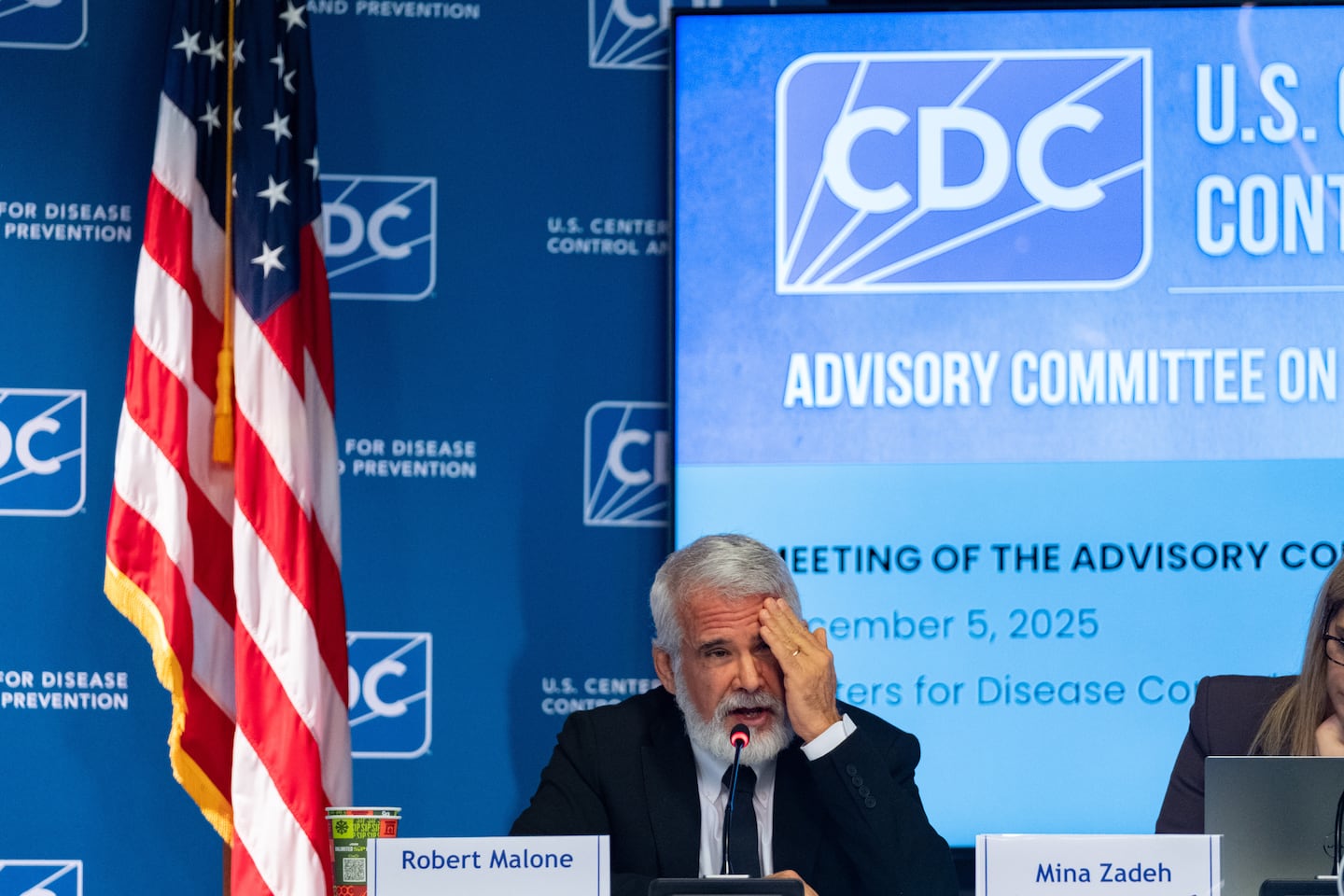
Last week, the Centers for Disease Control and Prevention’s advisory panel voted to drop the routine administration of the HBV vaccine to all infants. The recommendation corrodes one of the greatest public health victories of the past 30 years.
Hepatitis B is a viral infection that attacks the liver, causing both acute and chronic liver disease. While hepatitis B can be transmitted from the birthing parent (known as “perinatal transmission”), infants can also contract hepatitis B from caregivers, household contacts with known or unknown hepatitis B infection, or from surfaces and objects contaminated with blood containing hepatitis B virus (known as “horizontal transmission”). About 90 percent of infants who are infected with HBV develop chronic HBV infection, an often devastating and incurable disease that leads to increased risks of cirrhosis, liver cancer, and premature death. Up to a quarter of people infected at birth will die prematurely from the disease.
The HBV vaccine was first approved by the Food and Drug Administration in 1981 and was initially only administered to known high-risk populations, including newborn infants born to HBV-positive mothers. However, rates of viral infections were still increasing, including thousands of infants who had not contracted hepatitis B at birth.
By vaccinating through a risk-based strategy, the medical establishment was missing protection of large numbers of infants still at risk and hepatitis B was infecting 16,000 children under age 10 annually. Gaps in screening and detection occurred for infants born to women who had inadequate access to prenatal care and screening, whose tests were done in a window before infection, or who were exposed to hepatitis B virus in the first year of life from seemingly innocuous household items such as toothbrushes or nail clippers of unknowingly infected people. Since the United States adopted universal vaccination for hepatitis B of newborns in 1991, an estimated 500,000 childhood infections and 90,100 childhood deaths have been prevented, and the rates of HBV infections in children and teens have plummeted by 99 percent.
Babies born in Massachusetts will not yet be affected by the new CDC recommendation. Massachusetts and six other Northeast states will continue to recommend that every child receive the vaccination at birth. However, as my colleagues and I know all too well, poor information does not stop at state borders.
The ensuing confusion around the HBV vaccine for infants will inevitably create new gaps in protection, allowing for rising rates of infections. Public health experts and physicians have a responsibility to our patients and communities to help guide people through this confusion. But we cannot do it alone. Everyone has a critical role to play.
There are several key elements to this partnership:
▪ Conversations about vaccination cannot be rushed. Providers must resist the drive toward efficiency in medical visits and take the time to listen with respect and without judgement to patients’ concerns and fears of vaccination, recognizing that these fears are driven by love and wanting the best for their infants. At every medical encounter, providers have an opportunity to build shared health goals with patients.
▪ Patients and families, in turn, need to come ready to share their concerns and questions while being open to information about the risks of hepatitis B and the benefits of the vaccine for infants and the community.
▪ Trusted community voices are critical in this work. Connecting to trusted messengers where people eat, learn, pray, receive haircuts, and purchase beauty products is essential for keeping communities healthy.
▪ We must allow for the power of stories. People whose lives have been upended by chronic hepatitis B, who face not only the medical consequences of the infection but also the attached stigma, are beginning to speak out. Those voices matter.
We cannot afford to lose three decades of public health advances. The risks of hepatitis B are too great. We have the medical and public health tools, but it will take all of us to protect newborns and future generations.