


Much of America’s musical heritage is stored on artists’ studio tapes.
But as they age, many of those reels are slowly deteriorating …
… putting work by 20th-century masters like Bob Dylan, Fleetwood Mac and Bruce Springsteen at risk.
One audio engineer, armed with unconventional machinery, is trying to solve that problem before it’s too late.
Sitting at his studio console in New Jersey one afternoon this past spring, Kelly Pribble opened a yellowed cardboard box and pulled out a master audio tape by the jazz saxophonist Cannonball Adderley from 1975.
“A horrible year for tape,” he groaned.
Holding his eye close to the quarter-inch reel as he rolled it through a playback machine, Pribble noticed telltale signs of what he called “adhesion syndrome”: Parts of the tape were stuck together on their spool. Without special treatment, this studio recording of “Lovers” — a slice of funky jazz fusion recorded shortly before Adderley’s death — would be unplayable, the original music lost.
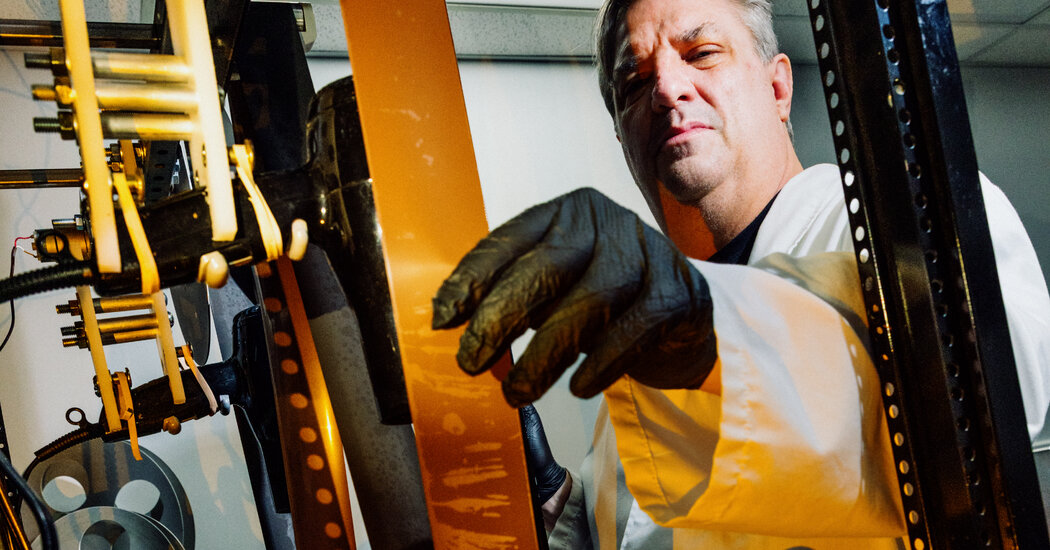
A huge portion of the world’s recorded musical heritage is stored on magnetic tape, used regularly from the 1940s into the digital age to capture musicians’ sounds in the studio. But as analog tape ages, it grows more fragile and vulnerable, posing a challenge for engineers like Pribble, 60, an audio preservation expert with the giant storage company Iron Mountain. For 15 years, he has been at the forefront of an obscure but vital industrywide effort to save old tapes — for which he employs an assortment of handmade tools and Rube Goldberg-worthy machines in a cramped workshop.
According to more than a dozen archivists and audio engineers, the problems facing tape have become more pronounced in recent years. Some of the most jeopardized recordings are from the 1970s and ’80s, after manufacturing changes introduced problems that became evident only with time. Unless the tapes are properly preserved, their slow decay will threaten the survival of original recordings from vast swaths of music history.
“It’s a race against time,” Pribble said more than once during a series of interviews over the last year.
Thank you for your patience while we verify access. If you are in Reader mode please exit and log into your Times account, or subscribe for all of The Times.
Thank you for your patience while we verify access.
Already a subscriber? Log in.
Want all of The Times? Subscribe.