


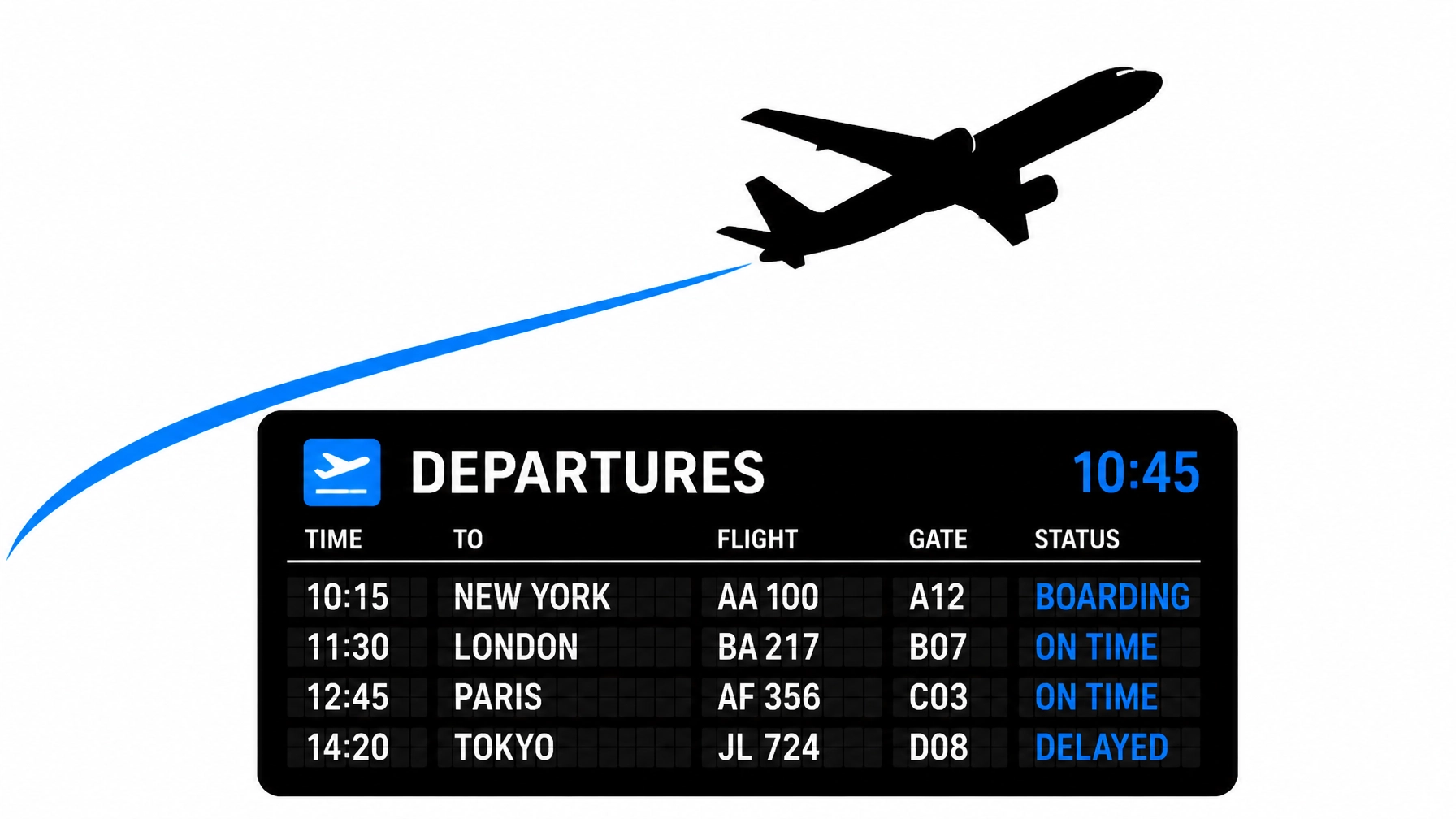
Not too many years ago, traveling during the summer felt like a predictable, sun-drenched reward. You’d pack your bags, head to the airport a couple of hours early, and: more often than not: your biggest worry was whether the in-flight movie was any good. Getting to know the players in the travel industry, enjoying the insights from seasoned explorers, and feeling that rush of departure was a seamless experience.
But as we look at the landscape in June 2026, the game has changed. The "summer flight chaos" we used to talk about as a fluke has become a seasonal reality. Between staffing fluctuations, increased demand, and the complexities of modern air traffic control, the airport can feel more like a gauntlet than a gateway.
At Dakdan News, we believe in arming our community of enthusiasts with common-sense strategies to navigate this. Whether you’re a frequent flier or planning your first big trip in years, here is our easy guide to surviving the madness, along with the travel news today you need to stay ahead.
Step 1: The "Early Bird" Booking Rule
If you are seeking a smooth journey, your first decision happens months before you even see a runway. The data is clear: early morning flights are your best defense against the "domino effect" of delays.
When a flight is delayed at 10:00 AM, it pushes back every subsequent flight that aircraft is scheduled for. By 6:00 PM, a thirty-minute delay has often snowballed into a three-hour cancellation. By booking the first wave of departures, you are essentially getting a clean slate.
Additionally, prioritize nonstop routes. Every connection is a potential failure point. If you must connect, give yourself a minimum of three hours. In the current climate, a 45-minute layover is a gamble you are likely to lose.
Step 2: Master the Art of the App

In the modern era of travel news today, your smartphone is your most valuable survival tool. Don't wait until you get to the gate to find out your flight has been moved.
- Download Everything: Get the app for your airline, your departing airport, and your arrival airport.
- Enable Push Notifications: Often, airline apps will update you on a gate change or a delay five to ten minutes before it hits the big screens in the terminal.
- Live Tracking: Use sites like FlightAware to see exactly where your incoming plane is. If the app says "on time" but your plane is still two states away, you know it's time to start looking at backup options.
Being "plugged in" allows you to be proactive rather than reactive. If a cancellation hits, you can often rebook yourself through the app while others are still standing in a 200-person line at the customer service desk.
Step 3: Ditch the Checked Bag

If there is one hill I am willing to die on as a travel writer, it is this: carry-on only is the only way to fly during summer chaos.
When flights are canceled or rerouted, your checked bag often goes on its own journey: sometimes to a different country entirely. By keeping your luggage with you, you maintain the flexibility to switch flights at the last minute without worrying about your clothes being stuck in a cargo hold.
If you absolutely must check a bag, use a digital tracker. Dropping a small Bluetooth tracker into your suitcase allows you to see exactly where your bag is, even if the airline’s system "loses" it. It’s about maintaining control in a situation that often feels uncontrollable. You can read more about industry shifts in baggage handling in our latest articles.
Step 4: Weaponize Your Buffer Time

Punctuality is no longer enough; you need a buffer. Not too long ago, arriving two hours before an international flight was considered conservative. Today, that’s the bare minimum for a domestic hop.
For summer 2026, we recommend the 3-4 hour rule for major hubs. Security lines are reaching record lengths, and staffing shortages at TSA checkpoints can appear without warning. Use that extra time to kick back in a lounge or find a quiet corner with a book. It is much better for your mental health to be bored at the gate than to be sprinting through the terminal while your name is called over the intercom.
Remember, if you are traveling for a high-stakes event: a wedding, a cruise, or a major business meeting: always fly in at least one full day early. "Common sense" travel means planning for the system to fail and having a 24-hour safety net.
Step 5: Know Your Rights (and Use Them)
When things go wrong, the airline isn't always going to volunteer the best solution for you. You need to be your own advocate.
According to recent Department of Transportation (DOT) updates, passengers are entitled to certain protections. If your flight is canceled for reasons within the airline's control (like staffing or maintenance), you may be entitled to meal vouchers, hotel stays, or even significant compensation if you are "bumped" from an overbooked flight.
Don't be aggressive, but be firm. Ask the gate agent specifically: "Is this delay within the airline's control?" and "What is the specific compensation policy for this length of delay?" Being informed turns you from a victim of the chaos into a negotiator.
Travel News Today: The June 2026 Outlook
In the broader world of travel news today, we are seeing a significant shift in how airports handle peak volume. Several major hubs have debuted new biometric screening processes to speed up security, but the rollout has been uneven, leading to "bottleneck" effects at older terminals.
We are also tracking a rise in "Travel Insurance Investment." More travelers are seeking out comprehensive plans that cover "Cancellation for Any Reason" (CFAR). Given the unpredictability of the current season, many experts view this as a necessary cost of doing business rather than an optional add-on.
At Dakdan News, we continue to monitor these developments across our network. From the latest updates on our press releases to deep dives on specific verticals like GoTravel.news, we are committed to keeping you informed.
Final Thoughts for the Savvy Traveler
Surviving summer flight chaos isn't about luck; it’s about preparation. By booking smart, staying tech-savvy, traveling light, and knowing your rights, you can navigate the 2026 season with confidence.
Travel is still a beautiful experience: it’s just one that requires a bit more strategy than it used to. Stay patient, stay informed, and we’ll see you at the gate. For more updates and to stay connected with our community, feel free to subscribe to our newsletter.