


Up until the late 1970s, rules around children’s TV were pretty strict. Networks had limits on how much they could advertise to kids, and shows were not supposed to feel like long ads. When the Reagan administration came in, one of its broader goals was to roll back federal rules in many industries, including media. As part of this push, the Federal Communications Commission began relaxing guidelines on children’s programming and advertising.
This opened the door for companies to create TV shows that were built around toys. Instead of a toy line getting a small commercial break, the entire show could now help promote the characters, vehicles, or playsets that would later appear on shelves. This shift led to the rise of shows like He-Man and the Masters of the Universe, Jem and the Holograms, Transformers, G.I. Joe, and My Little Pony. Each show introduced large casts, simple storylines, and clear visual designs that translated easily into action figures and accessories. Toy sales climbed, and networks had their schedules filled with series tied to merchandise.
The original Star Wars: A New Hope novelization, then titled Star Wars: From the Adventures of Luke Skywalker, was released in November 1976, several months before the movie premiered in May 1977. At the time, this wasn’t unusual for big sci-fi or adventure films to have one as part of their marketing; in fact, it isn’t unusual for films to have novelizations now. However, the gap was longer than normal because originally, 20th Century Fox had planned to release Star Wars in theaters in December 1976 (very close to the novelization’s release date), but production delays with special effects pushed back the release to May 1977.
The book was credited to George Lucas, though it was actually written by Alan Dean Foster using the script, early production notes, and designs to help fill in the gaps. Because the film wasn’t finished yet, some details in the novel didn’t match what ended up on screen. But the book was popular, and by February of 1977, it was already in its second printing. By the time the film opened, some readers were already familiar with the plot, which likely helped create early buzz.
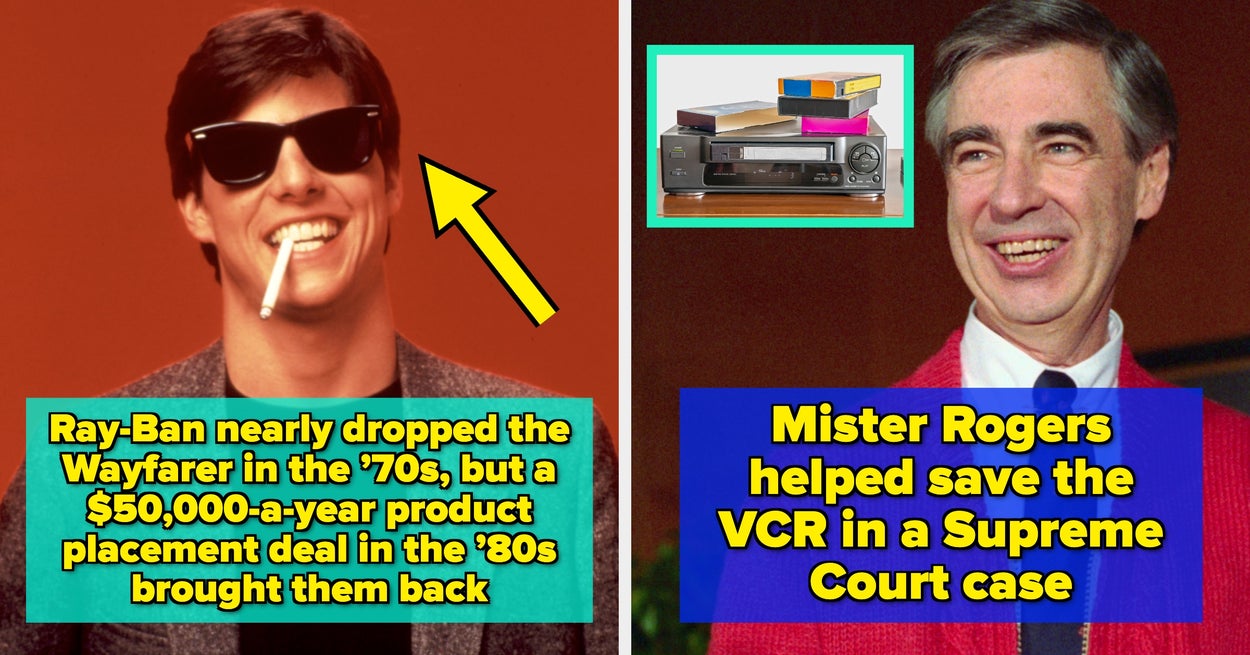
By the 1970s, Ray-Ban’s Wayfarer sunglasses had lost popularity. The mid-century design, which had been a hit in the 1950s and 1960s, was starting to feel outdated and, well, too ’50s. To revive interest, Ray-Ban made a strategic marketing move in 1982: they signed a deal worth $50,000 per year to feature their sunglasses in movies and TV shows. This type of product placement was still fairly new, but it allowed the brand to reach audiences directly through entertainment rather than traditional ads.
The strategy paid off quickly. Wayfarers appeared on screen in films and shows. like Risky Business and Miami Vice. They were then worn by big celebs of the time, which also made them seem trendy again. Sales surged as the glasses became associated with coolness and celebrity. Wayfarers would go on to become an icon of 1980s style.
The Betamax was released by Sony in 1975 (if you don’t know what that is, it was very similar to the VCR, and used better quality, but smaller tapes that had less recording time). While its competitor, the VCR, was introduced by JVC in the US two years later, in 1977. The idea for both machines was the same: