


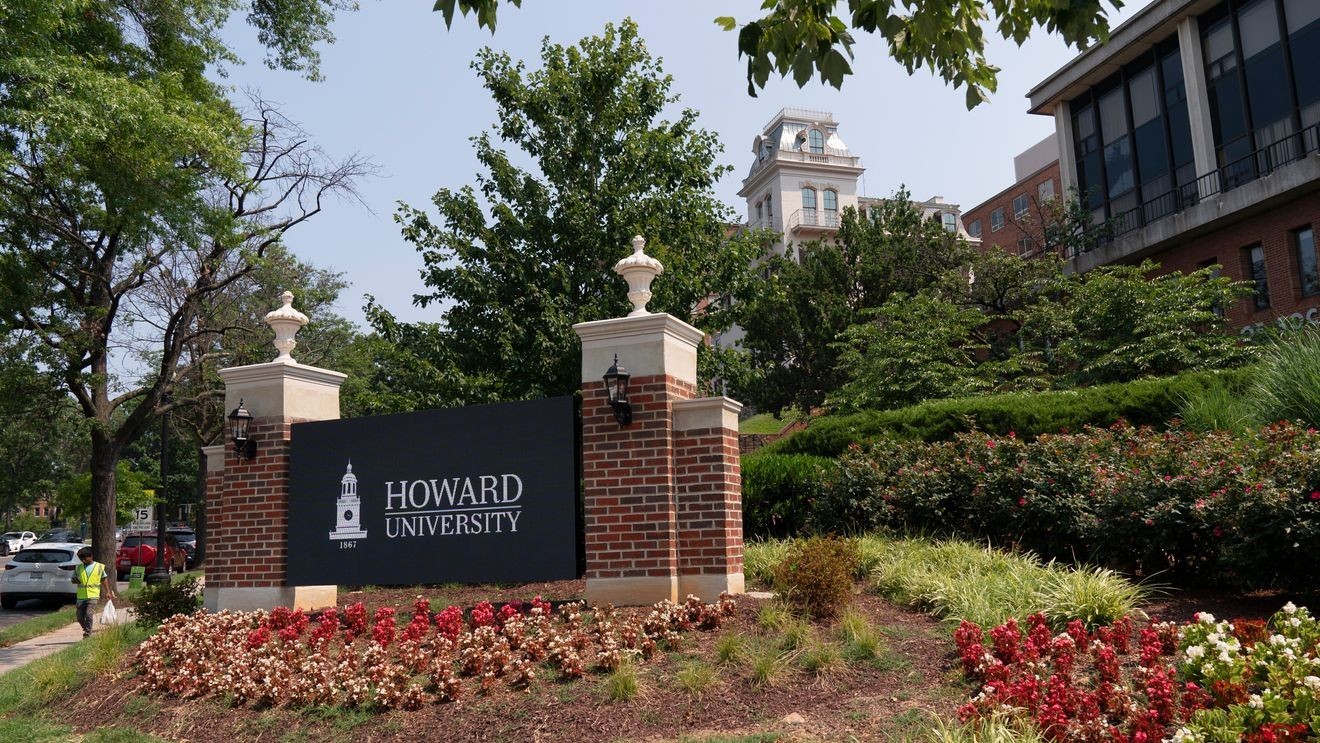
D.C.’s Howard University was featured in an animated video by the K-Pop group BTS, which teased its upcoming album.
The school’s callback has received mixed reactions on social media.
Here’s what happened.
The internationally known group released an animated teaser on March 12 for “Arirang,” their first album since their hiatus due to South Korea’s mandatory military conscription three years ago.
In it, band members were depicted performing on Howard University’s campus, a historic nod to seven Howard University students who in 1896 became the first Korean voices ever recorded. A building that appears to be the Howard University Founders’ Library, which opened in the 1920s, is visible in the background.
“They became the first to record Korean voices and music in the United States—an early example of the University’s enduring role as a crossroads of global culture,” A Howard University spokesperson wrote in a statement provided Tuesday.
Social media users praised the video for highlighting the historic moment that gave rise to the popular music genre. However, many criticized it for showing only a few black students during moments on the historically Black campus.
Comments across several Reddit forums called the move “disrespectful” and “distasteful,” though others challenged those claims.
The university did not provide an immediate comment on those concerns. BTS’ 14-track album is set to be released on March 20.
READ THE FULL STATEMENT FROM THE SCHOOL BELOW:
The story behind the “Arirang” recordings
In 1896, seven Korean men travelled to the U.S. to study at Howard University, which had been established in 1867.
A Washington Post article from that year, referenced at the beginning of the BTS, documented the men’s journey from Korea to Canada before they ended up in D.C.
In July 1984, anthropologist Alice Fletcher recorded several traditional Korean songs with three of the men, Ahn Jeong-sik, Lee Hee-cheol, and Son Rang, according to the Library of Congress (LOC). Those recordings took place at her home in Southeast, D.C., according to LOC.
Among those recordings were the songs “Blooming Plum Tree Song,” “Introductory Song for Dang-ga,” and the “Arirang” recording, some of which are available on the LOC website.