


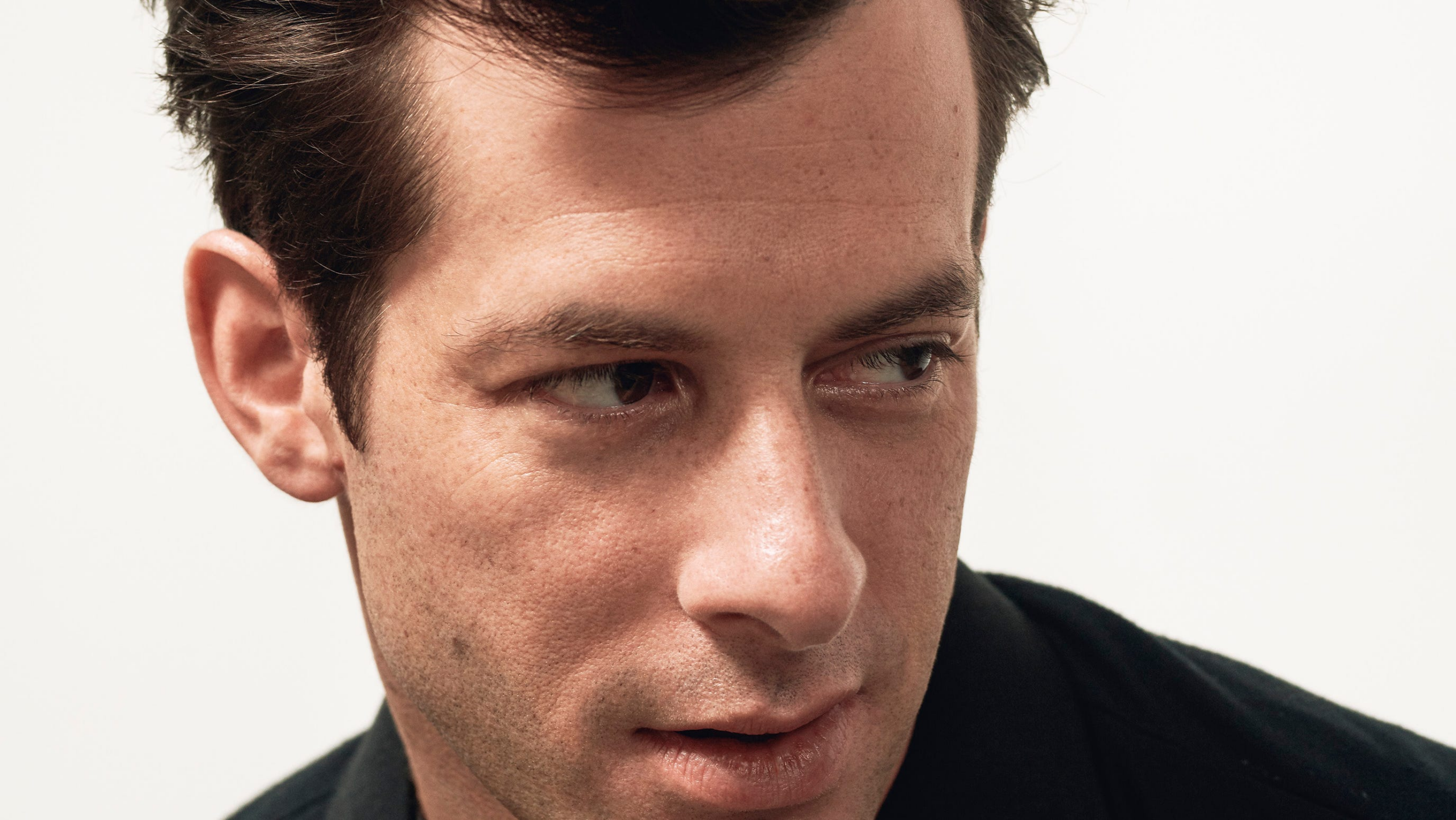
Toward the end of memoir “Night People,” Mark Ronson recounts a recent interaction with a woman at a New York club.
She approaches Ronson to compliment his Deee-Lite T-shirt and ask why he’s at the club. He says he’s known the night’s DJ for decades, having come up together on the scene.
“Oh, you used to DJ? That’s cool,” she says, eventually realizing she’s talking to that Mark Ronson.
The one whose career as a producer is intertwined with the skyrocketing success of Amy Winehouse. The stepson of Foreigner founder Mick Jones and childhood friend of Sean Lennon. The guy who won an Oscar for cowriting “Shallow” with Lady Gaga in “A Star is Born,” and earned Grammys for producer of the year, record of the year (“Uptown Funk”), song of the year (“Shallow”) and best compilation soundtrack for visual media (“Barbie the Album”).
That guy has joined the pantheon of producer-to-the-stars with artists including Dua Lipa, Duran Duran, Bruno Mars and Billie Eilish.
But before he was the 50-year-old Ronson who’s married to actress Grace Gummer (daughter of Meryl Streep) and dad to two young daughters, he was the Ronson who prowled the clubs of New York, his two turntables and a microphone the backdrop to a life speckled with celebrities, adrenaline and drugs as he learned the art of spinning the right beat at the right moment.
Ronson’s book (out now) is subtitled “How to Be a DJ in ‘90s New York City” and makes you feel that even if you didn’t live through the era, you’ll wish you had – or at least cautiously experienced a night or two.
So here’s to the “night people” – whom the British-born Ronson calls “the ones who become their best selves once the sun dies down” ‒ with some highlights from his book.
Foreigner’s Mick Jones inspired Ronson’s DJ career
When Ronson’s mother married Jones in a backyard garden, the music was an afterthought, something Ronson acknowledges as odd given his new stepfather crafted ‘80s anthems “Urgent” and “I Want to Know What Love Is,” among a dozen other hits.
But the lack of planning became Ronson’s first opportunity to play DJ at the age of 10.
Having sat with Jones in their home studio, Ronson understood the language of digital sound meters, tape machines and knobs and faders, as well as the importance of reading the room.
All it took was Jones to say, “Mark, go put something on,” and young Ronson rifled through cassettes including Taj Mahal and Robert Cray before finding the perfect wedding song: Eric Clapton’s “Wonderful Tonight.”
As he watched the new couple slow dance to Clapton’s valentine, Ronson had one thought: “For the first time in my life, I knew I’d done something right.”
Mark Ronson worried about his ‘chemical escape’
Ronson’s stretch of crate-digging in New York clubs including the Den of Thieves, Roxy, Palladium and Life unleashed the exhilaration of getting a crowd to dance in the hours most people were sleeping.
Whether spinning De La Soul and underground hip-hop or mixing AC/DC with Biggie Smalls, Ronson both reveled in the auditory stimulation with fellow vampires and slipped into the dangers of too many dark rooms. Light, for night people, was “kryptonite to good vibes.”
Ronson realized he was treading dangerous territory by “mixing drugs like cocktails” and recalls the night he “took heroin by accident,” because no passed bag of powder was ever questioned.
Gigs at the after-hours club Save the Robots and the Chelsea nightclub Tunnel “drove me to chemical escape,” Ronson writes, citing a night he mixed ecstasy with cocaine. His chest immediately tightened and his arm went numb.
“Could I be having a stroke at 20?” he remembers thinking. Friends drove him home and tended to him during the episode, which caused Ronson to contemplate his burgeoning addiction.
“I was lucky that somehow I never got completely swallowed up by those currents, as some did,” he recalls.
Mark Ronson recalls an intimidating Sean ‘Diddy’ Combs
The New York club scene also attracted major names who might waltz into the building with their crew and Ronson summons stories about being in rooms with Prince (no Michael Jackson was allowed on the playlist), Biggie Smalls (“like a visit from the pope”), Jay-Z (an “assured, magnetic presence”) and Aaliyah (whose giggle was “warmer than the LA sun”).
Ronson’s gig at the El Flamingo produced a visit from a then-ascendant hip-hop producer known at the time as Sean “Puff Daddy” Combs, who strode in “wrapped in white fur” and wearing shades.
“He scanned the room like a CEO inspecting a failed local branch and cocked his head at me as if to say, ‘Puff Daddy’s now in your … little party. You’re welcome.’”
Ronson hustled to play music he thought would please the intimidating figure – Frankie Beverly, Chaka Khan, Mary J. Blige.
As Ronson spun, Puff Daddy (aka the Sean “Diddy” Combs who’s currently awaiting sentencing in a Brooklyn detention center) walked to the DJ booth and waved a $100 bill at Ronson “like I was meant to park his Rolls.”
Ronson politely demurred the money twice until Combs barked at him with an expletive to take the money.
As Ronson remembers, Combs’ energy “transformed dead rooms into pure revelry.” But also, “something in that power hinted at combustion.”