


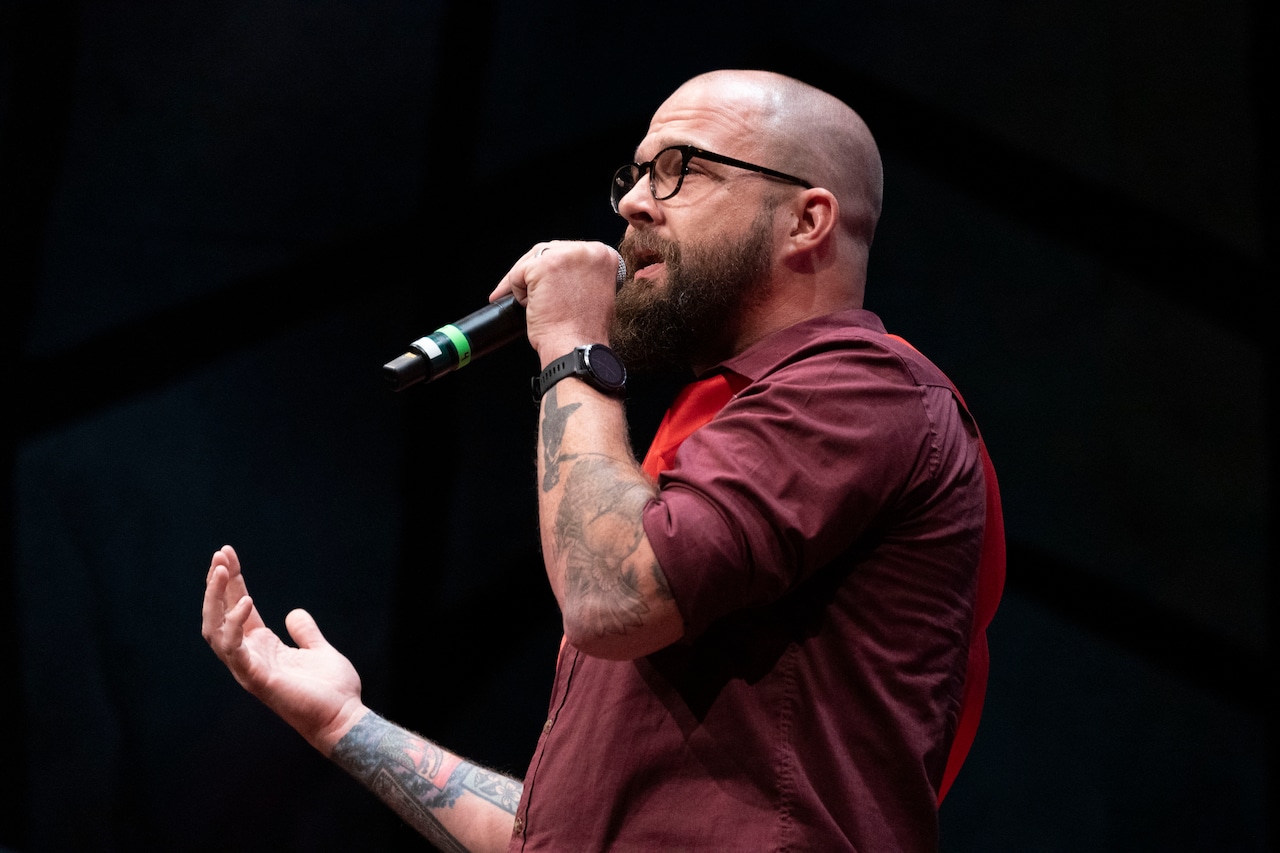
Portland Council President Jamie Dunphy will pursue a series of proposals intended to reform and reshape the city’s perennially loathed arts tax — and also create a new, separate surcharge to bolster live performances.
In an interview with The Oregonian/OregonLive, Dunphy said he believes the city’s 13-year-old levy on residents to support arts education in public schools and organizations citywide is outdated, poorly administered and in need of change.
He also said he wants Portland city government to raise millions of additional dollars each year to exclusively support music, dance and theater productions by imposing a fee on streaming service giants such as Netflix and Spotify.
While the plan is still far from finalized, Dunphy, a one-time touring musician and outspoken champion of Portland’s arts and music scenes, said he plans to begin bringing forward the measures to City Council this spring.
“I think I’m sort of uniquely positioned to be the only councilor right now who can and will dive into this sort of relatively thorny issue,” he said. “I still firmly believe that everybody loves art and everybody loves kids and everybody hates the arts tax.”
The annual $35 tax on any Portland adult with an income of $1,000 or more and living in a household above the poverty line has long been an object of annoyance and scorn among some city residents and even arts groups that benefit from it.
Frustration has further magnified in recent weeks after OPB revealed that the city has been quietly sitting on $9 million in unspent arts dollars even as arts organizations last year saw their funding from the program drop by nearly 50%.
Money collected through the voter-approved tax, about $12 million annually, goes to fund arts and music education in the six school districts serving Portland plus public art in the city.
Dunphy said that, as a first order of business, he will seek to steer a portion of the money currently in reserve toward “backfilling” some of the recent funding reductions experienced by nonprofits. He estimated the proposed outlay to be about $1.5 million annually over the next two years.
Separately, the council president said he would bring forward several proposed changes to the existing arts tax program. The first of those, Dunphy said, would allow residents to have their city arts tax withheld from their paycheck rather than receiving an annual standalone bill in the mail that they have to pay. Portland already allows this for a pair of local taxes the city also administers: Metro’s homeless services program and Multnomah County’s Preschool for All.
“We have the capacity to do this right now. We just need to update city code,” Dunphy said.
Dunphy also said he wants to “rightsize” the arts tax by exempting low-income residents from paying it while increasing the amount to $50 a year per adult for high-income households. He didn’t say what the high-income threshold would be.
Most Portlanders, he said, would continue to pay $35 annually in the first year, were those changes to be made. However, going forward, the arts tax would increase annually to keep pace with inflation.
“We could buy a lot more teachers for 35 bucks in 2012 than we can in 2026,” he said.
Lastly, Dunphy said he will pursue a new city tax on streaming entertainment services akin to one that’s existed in Chicago for more than a decade. The new surcharge, which Dunphy said he hopes could raise as much as $10 million annually, would be earmarked exclusively for supporting live art performances citywide.
“The basic values proposition is that audiences have not returned to pre-COVID levels in the city of Portland,” he said. “So we want to try and find a direct nexus between how to get people out from in front of Netflix and out into the community where they can see dance or music or whatever it is.”
“I firmly believe that the largest societal challenge we have right now is that people aren’t going out and being around each other,” Dunphy continued. “And if, as a city, if as a government, we want to have a vibrant economy, we simply must encourage people to get out.”
Yet Dunphy also concedes that any changes to the existing arts tax or imposing an additional one could be a tough sell politically, given persistent concerns among Portlanders about the rising cost of living.
“Affordability is an absolute problem, no question,” he said. “But also the city is just hemorrhaging the money we have over and over again, and we’re not paying for things the way that we should be.”