


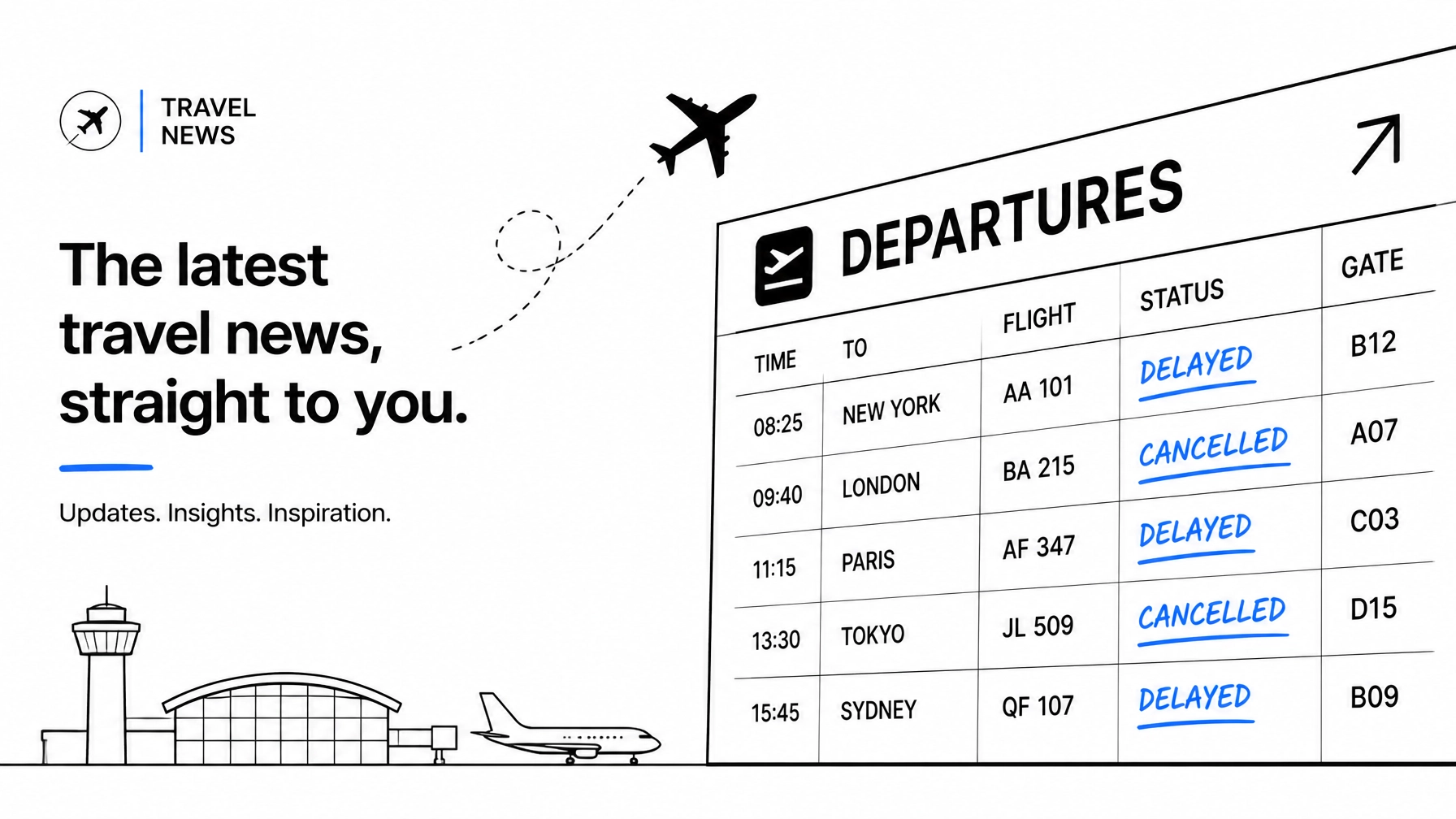
Not too many years ago, a summer vacation meant "kicking back" the moment you stepped into the airport terminal. You’d check your bags, grab a lukewarm coffee, and watch the planes taxi by, confident that you’d be touching down in paradise by sunset. Travel was a promise kept. Today, however, the landscape has shifted into something far more unpredictable.
As we look at the travel news today, it is clear that the "Golden Age" of stress-free flying has been replaced by a logistical gauntlet. In the summer of 2026, air travel has entered a period of high disruption characterized by fuel shocks, staffing crises, and record-breaking schedule volatility. From the FAA-mandated caps at Chicago O’Hare to the ripple effects of Middle East supply chain constraints, the modern traveler isn't just a passenger; they are a strategist.
If you’re planning to fly this season, you don’t need luck: you need a plan. Here is our definitive, five-step guide to surviving the summer flight chaos of 2026.
The State of the Skies: Why is it So Chaotic?
Before we dive into the survival steps, it is important to understand the "who, what, and where" of the current situation. For the first half of 2026, airlines across the globe have faced a perfect storm of operational hurdles.
In the United States, major carriers have been forced to trim their schedules significantly. The closure of budget-favorite Spirit Airlines earlier this year removed roughly 3% of total domestic capacity, leaving fewer seats for more travelers. Simultaneously, the FAA has implemented strict daily operation caps at major hubs through October, particularly affecting Chicago O’Hare, in an attempt to prevent total system meltdowns.
Across the Atlantic, the situation is equally "turbulent." European airports in Germany, Spain, and Belgium have reported over 1,200 delays in a single week due to a combination of labor strikes and outdated air-traffic control infrastructure. In fact, recent reports suggest that air-traffic control systems are struggling to keep pace with modern demand, leading to safety buffers that inadvertently cause massive bottlenecks.
Step 1: Master the Art of Strategic Booking
The battle for a smooth vacation is won or lost at the checkout screen. In the current climate, your primary goal is to minimize "fail points": any moment in your journey where a single delay can derail the entire trip.
- Prioritize Nonstop Flights: While a connecting flight might save you $100, the risk of a missed connection in a hub like Atlanta or Newark has never been higher. If you must connect, build a "buffer" of at least three hours.
- Fly Early: Data consistently shows that the first flights of the day (departing before 8:00 AM) are the least likely to be delayed. Planes are usually already at the gate from the night before, and the "delay snowball" hasn't had a chance to start rolling.
- Avoid the "Hub Crunch": If possible, fly into smaller, secondary airports. Choosing Burbank over LAX or Manchester over London Heathrow can save you hours of queuing at security and immigration.
Step 2: Leverage Technology for Real-Time Intel
In an era where airline notifications can be generic or delayed, being your own dispatcher is essential. Don't wait for the intercom to tell you your flight is cancelled; you should know it before the gate agent does.

The first thing you should do is download your airline’s mobile app and enable "Push Notifications." However, don't stop there. Services like FlightAware or FlightRadar24 allow you to track the "incoming" aircraft. If your plane is still two states away and scheduled to depart in 20 minutes, you know a delay is coming regardless of what the departure board says.
Additionally, consider the digital tools that make international travel easier. Staying connected is no longer a luxury; it’s a survival requirement. Using an eSIM for travel ensures you have data the moment you land, allowing you to rebook flights or contact hotels while others are still hunting for airport Wi-Fi.
Step 3: The "One-Bag" Rule and Emergency Readiness
One of the biggest contributors to "travel news today" headlines is the mountain of lost luggage currently stacking up at major international terminals. When staffing is short, the baggage handlers are often the first to feel the squeeze.

- Go Carry-On Only: If you can fit your life into an overhead bin, you eliminate the risk of the airline losing your suitcase. You also gain the flexibility to switch to an earlier or alternative flight if yours is delayed, without waiting for the ground crew to find your checked bag.
- Pack for the "Long Wait": Treat your personal item like a survival kit. Include a portable power bank, essential medications, a reusable water bottle, and high-protein snacks. In the 2026 TSA staffing crisis, security lines have been known to stretch into terminal basements, making a two-hour wait the new "normal."
- Digital Paperwork: Keep digital copies of your passport, insurance, and hotel reservations in an offline-accessible folder on your phone.
Step 4: Know Your Rights (And How to Enforce Them)
When the worst happens and you’re stranded, common sense isn't enough: you need to know the law. Depending on where you are flying, you may be entitled to significant compensation.

For those flying within or from Europe and the UK, rules like UK261 and EU261 provide some of the strongest passenger protections in the world. If your flight is cancelled or delayed by more than three hours for reasons within the airline's control (like staffing or mechanical issues), you could be entitled to hundreds of dollars in compensation, plus meals and hotel vouchers.
In the US, the Department of Transportation (DOT) has recently tightened rules regarding automatic refunds. If your flight is significantly changed or cancelled and you choose not to travel, the airline is required to provide a refund to your original form of payment: not just a travel voucher.
Pro Tip: If you're at the airport and a flight is cancelled, get in the physical line at the service desk, but also call the airline's customer service number and use the app’s chat feature simultaneously. Whichever channel responds first is your ticket out.
Step 5: Have a "Plan B" and Travel Insurance
Seeking a stress-free summer means accepting that things might go wrong and having a backup ready. This is where "common sense" authority meets financial literacy.
Never fly in 2026 without comprehensive travel insurance. With fuel prices driving up fares and the Middle East conflict causing route diversions, a single cancellation can lead to a very expensive last-minute hotel bill. Many credit cards offer built-in travel protection, but read the fine print: ensure it covers "trip interruption" and "delay expenses."
Finally, keep a list of alternative routes. If your flight from New York to London is cancelled, could you fly into Paris and take the train? Knowing your alternatives gives you the confidence to negotiate with gate agents for a better re-route.
Conclusion: Community of Enthusiasts
We at Dakdan News believe that travel is still one of life's greatest investments, even with the current chaos. By becoming invested in the process: monitoring the "travel news today," using the right tech, and knowing your legal rights: you move from being a victim of the system to a savvy navigator of it.
The skies might be crowded and the queues might be long, but with these five steps, you’ll be the one "kicking back" while others are still checking the board. Safe travels!