


There’s a spectre haunting modern documentary filmmaking—the eternal return of Jason Holliday, the subject of Shirley Clarke’s 1967 film “Portrait of Jason.” It’s not the first portrait film but it’s the definitive one—not least because its raison d’être is built into it. Holliday, an unsuccessful actor, gives of himself with a reckless, unself-sparing profligacy, and Clarke turns the audiovisual recording of him into a work of art in itself, one in which Holliday’s presence and performance aren’t merely preserved but enshrined and exalted. Portrait films—whether promotional celebrations, like “Joan Baez: I Am a Noise,” or more reserved observational works, such as “Honeyland,” have become a staple of nonfiction cinema. With proliferation has come predictability, but right now there are some notable portrait films of admirable originality. By virtue of distinctive approaches to form and a willingness to foreground and explore the relationship between filmmaker and subject, these documentaries both honor and extend the legacy of Clarke’s film and Holliday’s performance.
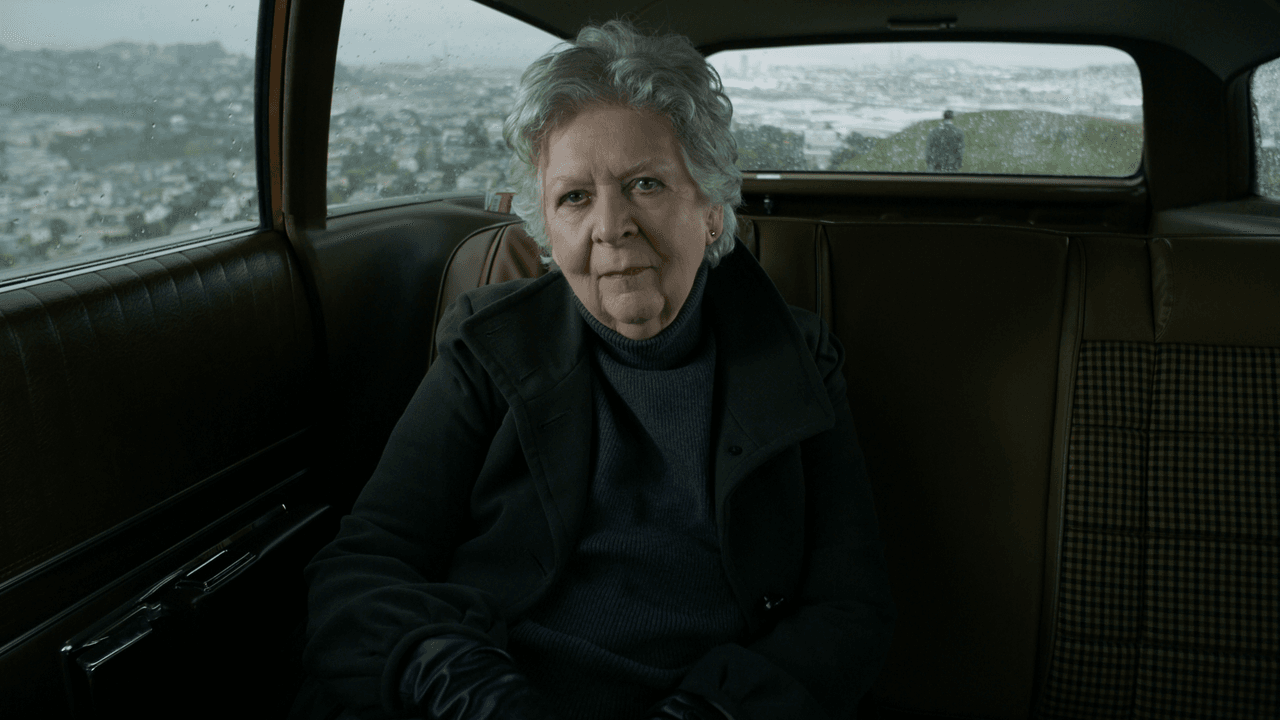
The strangest and most mysterious of them, Robinson Devor’s “Suburban Fury,” was one of the highlights of last year’s New York Film Festival and is only now opening, at the Alamo Drafthouse, in a slightly different cut that refines its dramatic arc. Its subject is Sara Jane Moore, who, in San Francisco, in 1975, attempted to assassinate then President Gerald Ford. She was arrested, pleaded guilty, was sentenced to life in prison, and was released on parole in 2007, at the age of seventy-seven. (She died this past September.) For his film, Devor filmed Moore in San Francisco a couple of years after her release (in 2009 and 2010) and recorded voice-only interviews with her in New York—coördinating with the Secret Service, which had to grant permission. As an onscreen title card states, Moore stipulated that no other interviewees be included in the film. That requirement fundamentally and beneficially shapes the work: in order to fill in the historical record and offer counterpoint to her perspective, Devor can only turn to the historical record itself, in the form of print and broadcast journalism and other documentation. The result is a monologue that’s also a dialogue—a first-person story, ranging from Moore’s youth to the aftermath of her crime, that pings back and forth between her perspective and ones provided by the world at large.
The story that Moore tells is fanatically detailed yet peculiarly diffuse, reaching back to her Women’s Army Corps training in 1950. She describes the martial ardor that she and other recruits felt and also their collective frustration that, as women, they were barred from combat training with weapons. She also recalls her failed career as an actress, including an audition with the Actors Studio—a story which Devor documents with head shots and other photographs. She left a trail of relationships, marriages, and, for that matter, children—several of whom she parked with her parents, in West Virginia. After the breakup of one marriage, she moved from Danville to San Francisco and there, in the early nineteen-seventies, became involved with left-wing groups and activists. These included the Black Panthers, Vietnam Veterans Against the War, and Wilbert (Popeye) Jackson, who had founded the United Prisoners Union while incarcerated in San Quentin. Moore also became involved with the Symbionese Liberation Army—the group that kidnapped Patty Hearst in 1974—not least, because she knew the young woman’s parents, Mr. and Mrs. Randolph Hearst, from her well-to-do suburban social circuit.
At the same time, Moore was an F.B.I. informant, working with a handler who went by the pseudonym of Bertram Worthington. He becomes a prominent character in “Suburban Fury,” although, given that Moore is the only interviewee, Worthington is a character essentially of her conjuring. She relates their discussions in detail, and, on the soundtrack, Devor lends his own voice to the Worthington of Moore’s accounts. This central relationship—which she considered a friendship until being disabused of the notion by a trivial incident—turns “Suburban Fury” into a paranoid masterwork, depicting deception morphing into self-deception and principle twisting into delusion. Moore insists that she betrayed no one and nothing—that her contact with the F.B.I. came in part at Jackson’s behest and that she passed along only publicly available information—yet leftist groups were warned, publicly and privately, to keep their distance from her, on the ground that she was an infiltrator.
Moore’s experiences undercover were horrific, including sexual assault and death threats. At the same time, her political principles were solidifying—she went from bemused skepticism regarding revolution to a belief that her intended assassination of Ford would hasten its arrival. She recounts the meticulous planning, both practical and psychological, that she devoted to her plot—not least, her difficulty in obtaining firearms. There is also a surprising twist—a police stop the day before Ford’s arrival in town—that plays out like a sequence from a wildly implausible thriller. The over-all effect is of fanatical veracity transmitted through a shattered lens; one of Moore’s first remarks in the film suggests that her political operations were nothing less than an additional identity, and what emerges from the multiple selves that developed in her mind is a set of parallel but incompatible rationalities that add up to a form of madness.
Along with the wild psychology of “Suburban Fury,” Devor evokes the era’s wild politics, which, for all its ideological phantasmagoria, create unimpeachable realities. He interviews Moore in settings that resonate with historical significance, keeping the camera at enough of a distance to evoke these wider contexts, and he juxtaposes archival materials showing events and participants from her story with footage of relevant settings as they are today. In so doing, Devor pulls the history under discussion into the present tense—and, conversely, uses the present day as a kind of cinematic X-ray that reveals tensions and conflicts of half a century ago, some of which (including ones involving the radical right) are still roiling American society.
I have no idea whether Amalie R. Rothschild saw “Portrait of Jason” before making her first film, the 1969 portrait film “Woo Who? May Wilson” (which is now streaming on OVID.tv and Kanopy), but Clarke’s film nonetheless figures briefly in it. Wilson, who was sixty-three at the time that Rothschild filmed her, had been living a conventional upper-middle-class life in Maryland while also attempting to fulfill her artistic ambitions until three years earlier, when her husband ended the marriage. She moved to New York and devoted herself to her art work, which included making assemblages of everyday objects that she collected. Scanning Wilson’s stash, the camera catches an oval lapel button featuring an image of Jason Holliday in Clarke’s film, along with the slogan “I saw Jason”—promotional swag for people who attended a screening.
Rothschild’s film is a different kind of project from Clarke’s, with different kinds of problems. Clarke shot her film in a single all-night session in her apartment, at the Chelsea Hotel (coincidentally, where Wilson first lived after moving to New York), and shows Holliday solely as he presents himself to the camera. Rothschild shows Wilson as she was in her daily life, living and working alone in Chelsea, socializing with younger artists, receiving visits from her children and grandchildren, and running errands—artistic and otherwise—in the neighborhood. Despite the teeming onscreen activity through which Wilson leads the viewer, Rothschild—clearly captivated by Wilson’s work, ideas, and personality—is intent on filling the movie with the subject’s art and voice.
The result is a thirty-four-minute short that overflows with energy and information, action and reflection, the tumult of city life and the febrile intimacy of creation on the wing. Wilson, too, is a character of many identities—albeit ones intentionally fostered and adopted, as a central subject of her own work. One crucial and picturesque site of her artistry is a photo booth in a Times Square arcade, where she often went to make strips of selfies, each featuring her in a different, usually antic, expression. She would take those photos and collage them into familiar images from art history or contemporary mass culture, turning herself into a comic protagonist of an uproariously vast range of iconography. With the bustling activity and views of the photos joined to Wilson’s voice—she is startlingly candid about her self-deprecating view of her work and about a therapist’s response to it—the film reaches symphonic dimensions.
Wilson’s autobiographical reflections touch on her long-frustrated efforts to carve out a space of independence within her marriage and on the anguished condition of a woman artist of her generation. Her social life is conditioned by the dearth of peers, and the younger artists she knows are so often on the move that relationships are as readily broken as formed. Making her way through her new neighborhood and experiencing a difficult rebirth in solitude, initiating grandchildren in art, playfully yet ruefully considering (in the company of friends) the worrisome effects of aging, reflecting on her improvisational creative process, finding herself immersed in an art-world scene where she remained an outsider, she reveals herself to Rothschild’s empathetically inquisitive, ardently discerning camera no less candidly than Holliday did for Clarke.
Another portrait film, “Put Your Soul on Your Hand and Walk,” released here last month, uses a daringly original form to bring to the screen the cinematically elusive yet pressingly significant experiences of an extraordinary person. In it, the director, the Iranian-born, Paris-based filmmaker Sepideh Farsi, explains that, when thwarted in her effort to enter Gaza and report on the devastation of Israel’s attacks, she made contact with Palestinian refugees in Cairo, one of whom connected her with Fatma Hassouna, a twenty-four-year-old photographer in Gaza City. Farsi and Hassouna built a friendship by way of video calls, which the filmmaker began to record, pointing a camera at her phone.
Most of “Put Your Soul on Your Hand and Walk” shows Hassouna in the vertical image captured by her phone; only intermittently does Farsi show herself and her surroundings. Their talks—in English, their common language—cover nearly a year in their lives. Even as Hassouna unstintingly describes ordeals of bombardment and deprivation, she has a preternatural exuberance—evident in her voice and her smile—that appears to be of a piece with her artistic energy and her relentless will to bear witness. She displays photographs that she has taken in Gaza; she recites one of her poems (in Arabic, subtitled) about the immanence of death under siege; she informs Farsi of friends and relatives who have been killed.
Farsi, a former political prisoner in Iran, briefly broaches politics with Hassouna, opening up a fascinating and painful contrast between life-worn realism and youthful idealism. Over the course of their discussions, Hassouna’s daily life becomes agonizingly difficult, and she admits to depression. This film was accepted at this year’s Cannes Film Festival, and Farsi hoped that Hassouna might be able to join her there. But, as Farsi reports in the film, between the invitation and the festival, Hassouna was killed by an Israeli airstrike. Farsi hasn’t made a rhetorical film of persuasion—anyone who needs a name and a face to be moved by reports of killings is beyond persuading—but a personal memorial for a friend and a public archive of that friend’s work. ♦